

Gambling became a legal and regulated sector of the Ukrainian economy only five years ago. Prior to that, the industry operated in a “grey zone” due to a long-standing ban and the absence of clear regulatory rules.
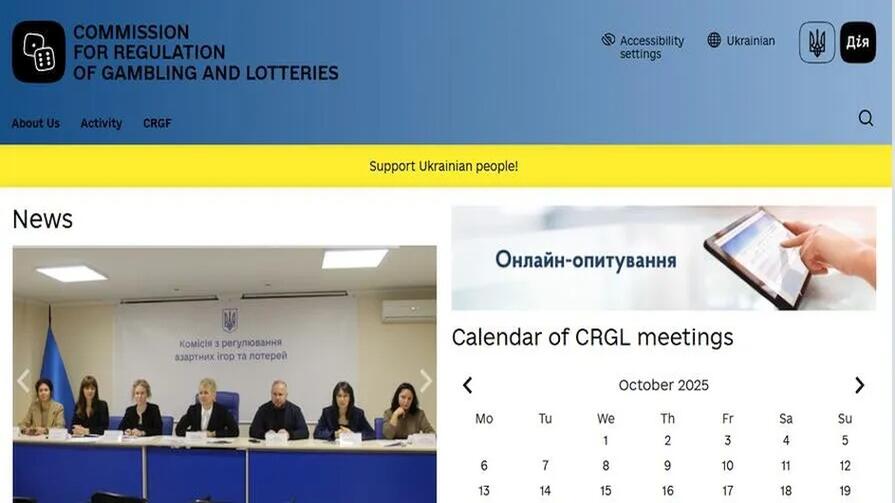
With the establishment of the Gambling and Lotteries Regulation Commission (Komisiia z rehuliuvannia azartnykh ihor ta loterei, KRAIL, also referred to as KRAL or CRGL), the market gained new regulatory safeguards, while the state acquired an effective instrument of oversight and control.
Basis of Regulation and the Structure of the Commission
The official launch of the Ukrainian commission took place in September of 2020, following the adoption of the “On State Regulation of Activities Related to the Organisation and Conduct of Gambling” Law (No. 768-IX). The commission employs more than 300 staff members, including regional directors and a central office based in Kyiv.
The primary role of KRAIL is to license operators, oversee compliance with the law, and monitor payment processing and the quality of services provided. The commission issues licenses across separate segments: online casinos, online poker, sports betting, land-based casinos, slot machine halls, and B2B software providers.
The licensing process includes a financial audit of companies, while websites are tested for payout transparency and the quality of player data protection. Operators are required to comply with age restrictions (gambling is permitted from the age of 21), implement identity verification, openly disclose gambling risks to users, and enforce betting and deposit limits. Under the law, licenses are issued for five years, with annual fees ranging from approximately $1.2 million for online casinos to up to $5.8 million for betting operators. Online gambling is taxed at 18% of GGR (gross gaming revenue), slot machines at 10%, and player winnings are subject to a 19.5% tax.
Player Protection and Social Responsibility
KRAIL actively implements a range of restriction mechanisms: players have access to limits on deposits, bets, and playing time, as well as a self-exclusion system that allows them to block access to gambling services.
All licensed platforms display contacts of the support service and warnings regarding gambling risks. In recent years, the number of young people participating in online gambling has increased, prompting the commission to strengthen digital identity verification, enforce a strict ban on underage registration, and closely monitor compliance with advertising regulations.
In 2025, gambling advertising is subject to tighter regulation: offline advertising is prohibited, and the use of military or patriotic symbolism and the images of public figures is restricted. All bonus programs must be transparent, and marketing activities must not encourage participation among vulnerable groups, including military personnel.
Key Achievements and Contribution to the State Budget
Since the beginning of the legalization campaign, more than 80 licenses have been issued, and tax revenues have increased from 200 million hryvnias to over 17 billion hryvnias by 2024. In the past year alone, legally operating companies paid more than 18 billion hryvnias in taxes and license fees. The total revenue of this economic sector has grown to 142 billion hryvnias (nearly €3 billion), and tax reforms are strengthening the financial stability of both operators and the state.
Combat Against the “Shadow Market” and Oversight Challenges
Despite the progress made, an estimated 40–50% of the market still operates in the shadow sector. This is due to weak illegal website blocking mechanisms, insufficient penalties, and challenges with technical oversight tools. KRAIL regularly publishes a public “blacklist” of unscrupulous operators, but not all providers block prohibited websites. Over the past five years, 512 requests for bans have been submitted, of which fewer than one-third have been executed. The combat against the grey online gambling market remains a pressing challenge for the coming years.
Regulatory Reforms and New Trends
In 2024–2025, the commission underwent significant reforms. At the beginning of 2025, KRAIL was officially abolished (formally liquidated as of April 1). Its responsibilities were transferred to a new body, the State Agency of Ukraine PlayCity, while some powers moved to the Ministry of Digital Transformation. Oversight was strengthened through the implementation of the SOMS online monitoring system, which tracks casino and bookmaker operations in real time.
New laws tighten requirements for financial reporting, anti-money laundering, digital security, and client data protection. Operators are required to integrate the SFUS financial monitoring system and undergo rigorous checks to ensure they have no links to Russian companies.

In December 2024, the State Bureau of Investigation detained Ivan Rudyi, the head of the Gambling and Lotteries Regulation Commission (KRAIL).
Prospects and Impact on the Future
The Ukrainian model combines strict regulatory standards, digitalisation, and gradual market development. The commission implements modern support platforms, trains operators in social responsibility, and introduces AI-based analysis of operator risks. At the same time, the entire gaming industry is becoming increasingly transparent, and the state receives stable tax revenue to fund key sectors of the economy.
The Ukrainian experience demonstrates that a legal gambling market, under effective oversight, can become a source of economic growth, with the commission serving as a tool for citizen protection and sector-wide transparency. The key objectives for the near future are to complete anti-corruption reforms and transition to a fully digital model of oversight, enabling more effective restrictions against grey operators and ensuring that gambling is as safe as possible for all participants.
 NGC License
  HGC License
  of the Gaming Board for The Bahamas
  QUINEL Testing Laboratory
  GCB License


