
Gambling has been a part of everyday life in Greece for a long time – from simple lotteries to modern online casinos and gaming platforms. For millions of people, it is a familiar form of leisure, while for the national economy it represents a significant source of revenue. To ensure that the entire sector remains legal, safe, and beneficial to society, the Greek state established a dedicated regulatory authority: the Hellenic Gaming Commission (HGC). Since 2012, the Commission has been overseeing the entire gambling industry, protecting the interests of citizens and maintaining a sustainable development of the market.
Regulation, Licensing, and Fair Competition
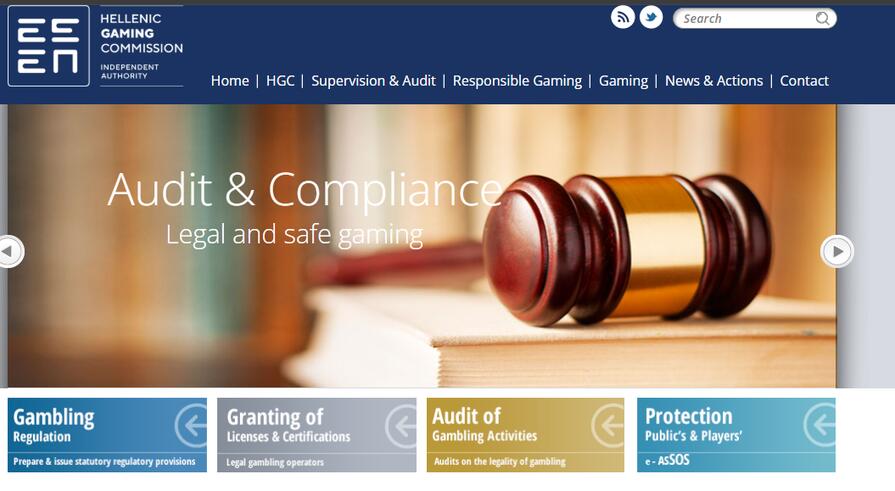
The regulatory framework is built on transparency and strict supervision of all market participants. Although the Hellenic Gaming Commission (HGC) was established back in 2004, it gained real authority and real world effectiveness only after the adoption of new legislation in 2012. Today, the Commission is composed of nine members – specialists in finance, technology, law, and auditing. Its role goes far beyond issuing licenses: HGC continuously oversees compliance with legal requirements, audits operators’ financial standing and technical infrastructure, and monitors adherence to data protection and social responsibility standards.
Every new operator must demonstrate its reliability by proving the transparency of its financial reporting, the stability of player payouts, and the security of its platform. Licenses are issued for a period of seven years and involve significant costs: three million euros for online betting operations and two million euros for launching an online casino or lottery. At the end of the license term, the Commission conducts a full reassessment of the operator. This mechanism acts as a market filter, preventing random or ill reputed companies from entering or remaining in the industry.
Safety and the Protection of Citizens
One of the Commission’s main priorities is the genuine protection of ordinary players. Greece enforces strict age restrictions: participation in gambling is permitted only from the age of 21, and major platforms verify the documents of their customers to ensure that nobody is bypassing the law. Players can set limits on deposits and bets, set time-based access restrictions, or block their accounts entirely – all of these measures are initiated voluntarily by the user. At any time, players have access to a support hotline where advisers can help resolve issues or warn about potential risks.
The Commission pays particular attention to the prevention of gambling addiction. Licensed platforms provide guidance materials, practical advice, and contact details for organisations that offer professional support. After the pandemic, the online segment experienced significant growth, especially among younger users. To prevent gambling related risks and protect minors, the HGC introduced stricter digital verification measures, creating a safer environment in which random or vulnerable users are subject to enhanced oversight.
Market Dynamics and Contributions to the Budget
Aside from social responsibility, another key aspect of the Commission’s work is its substantial financial contribution to the state budget. In recent years, the legal gambling market in Greece has been growing rapidly. In 2022, licensed operators processed payments totaling €29 billion, rising to €36 billion in 2023. Nearly 70% of the market is now online, by means of user-friendly websites, mobile applications, and “live” online casinos.
In the first eight months of 2024 alone, the legal sector had already processed €28.3 billion. During this period, the national operator OPAP generated €6.6 billion, while land-based casinos – despite the challenges facing offline businesses – improved their performance and contributed €1.3 billion to the country’s budget.
The key benefit for the country lies in stable and transparent tax revenues. Operators pay a 35% tax on gross gaming revenue (GGR): in 2023, the state collected €893 million in gambling-related taxes, and a further €476 million in the first half of 2024. These funds support healthcare, sports, education, social programs, and infrastructure development. A significant part of the sector’s benefit to the country also comes from charitable initiatives and the financing of sports teams and educational projects.
New Technologies and Combat Against Illegal Operations
Grey and black gambling markets are steadily shrinking, but they have not disappeared entirely – around 10% of players still occasionally use illegal services. To protect citizens, the HGC maintains a blacklist of unlicensed operators. This register is regularly updated and shared with internet providers to block suspicious and prohibited platforms. At the same time, the Commission carries out public awareness efforts, explaining the risks of gambling on illegal sites – including unpaid winnings, lack of player protection, and limited or non-existent customer support.
The modern gambling market is inseparable from digital technology. The HGC actively deploys advanced tools such as user behaviour analysis, automated risk detection systems, and even artificial intelligence capable of identifying early signs of problem gambling long before players themselves seek medical help.
Future, Education and Trust
In the coming years, the Commission plans to expand educational initiatives on responsible gambling, strengthen addiction prevention measures, and further enhance digital cybersecurity. Players can feel confident that regulations are not becoming harsher, but rather user-friendly, and easier to understand. Operators are required to strictly comply with established standards, remain aware of potential risks, and fully adhere to legal requirements.
The state benefits from stable revenue streams, all the while Greece serves as an example for neighbouring countries of how to build a fair, modern, and secure gambling market. In this framework, betting platforms, lotteries, and online casinos are transformed from being perceived as “shady dealings” into a transparent and well-regulated form of entertainment that can be effectively controlled and even bring benefits for society.
This approach demonstrates that coordinated regulatory efforts and robust rules lead to positive outcomes. Greece has become a notable player in the European gambling market, and the HGC stands as a guarantor that the market is going to be developing in a fair and safe manner for both players and operators alike.
 NGC License
  Commission for Regulation of Gambling and Lotteries Gaming License
  of the Gaming Board for The Bahamas
  QUINEL Testing Laboratory
  GCB License


