
Craps is one of the world’s oldest pastimes. Being mentioned in the Bible as well as ancient Indian epics, its popularity surged during Ancient Rome and the Middle Ages. The church tried to ban it due to bones being used for fortune-telling, but was unsuccessful.
Across the countries of the former USSR, craps was rarely played. Around 2004-2005, Moscow had about 35-40 gambling establishments, with only 6 hosting craps tables.
Over time, craps has evolved from a simple pastime into a staple of global gambling entertainment. While you can play online, the most unforgettable experience comes from playing with chips at a real casino table.
General Rules of Craps
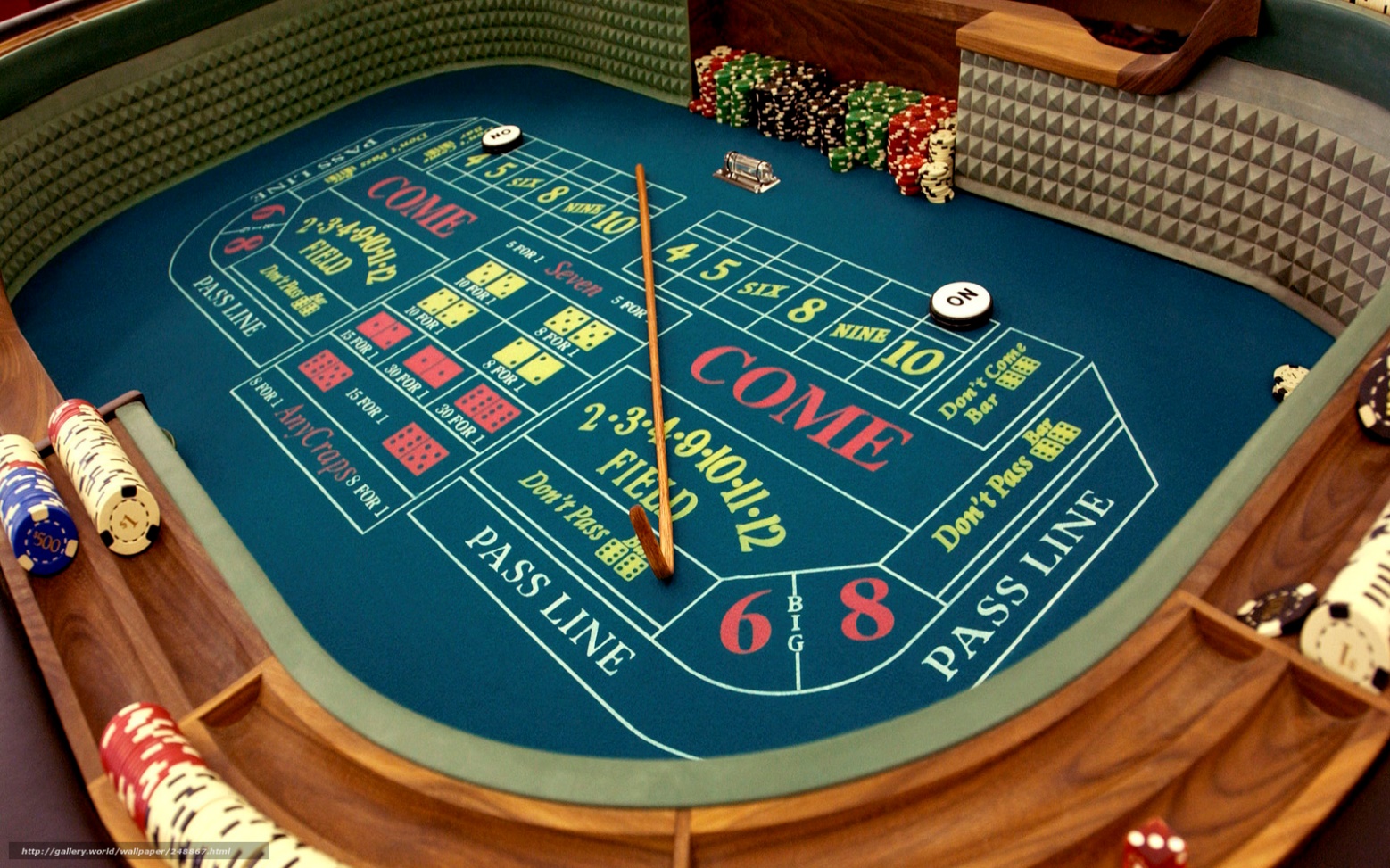
Playing craps at home is not a simple endeavour. The game requires a special table equipped with high edges padded with soft material, so the dice bounce properly when thrown. The table can be double-sided (with two playing areas) or single-sided (about 3.5 meters long with one playing area).
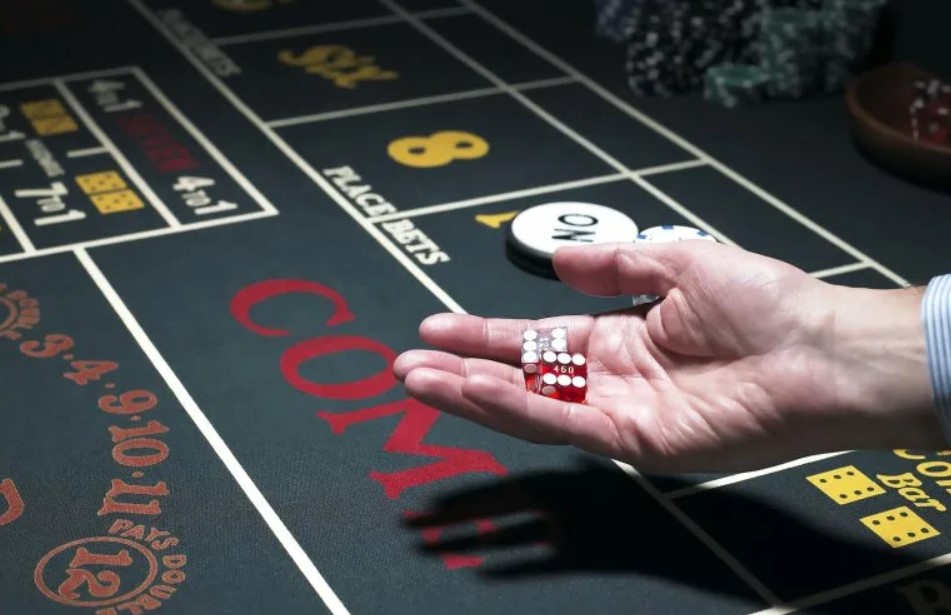
The dice are the main focus of the game. They are small cubes with sides marked from 1 to 6 dots, which indicate the number of points that the player will roll. After a throw, the round ends with one of 36 possible outcomes.
Interesting fact: Historically, dice were made from natural materials like wood, metal, nuts, and animal teeth. Ivory was particularly sought after. Today, they are mostly made from dense cellulose.
You can ask the croupier for a different pair of dice, hence the game involves:
- 2 dice for rolling;
- 3 additional substitute dice.
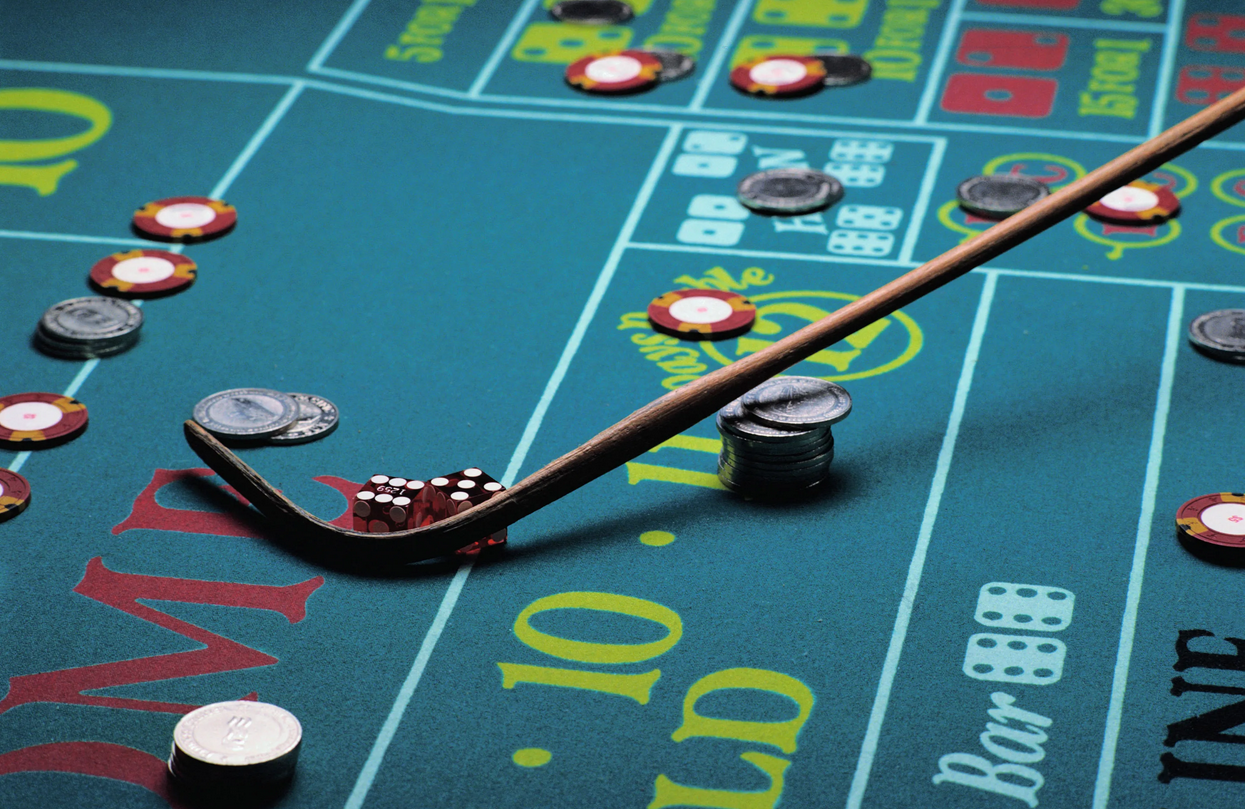
A special stick is also used. The casino employee called a “stickman” uses it to collect the dice off of the table.
The goal of the game is to roll a predetermined number before a 7 appears on the dice. The winning number is marked with a puck bearing the words “ON” and “OFF.”
There are two approaches to the game:
- Strategic. Players place bets according to a specific pattern in two stages, using a limited number of bets. Their goal is to play with the highest possible probability of winning, which is about 99.56%.
- Recreational. Players place bets randomly, picking numbers or combinations they like. Their goal is to enjoy the gaming experience.
One of the players at the table is chosen as the shooter. This role can be passed on to another player.
Usually, 4 staff members service the table from the casino’s side:
- The stickman (croupier) conducts the game and hands the dice to the shooter. He also places players’ chips in the center of the table.
- Two base dealers manage different parts of the table, accepting bets and paying out winnings.
- The boxman exchanges chips for money and oversees payout calculations.
A single player requires only a stickman and a baseman to play. As the games proceed at a quick pace, an additional staff member oversees the table when a large number of participants are present.
Interesting fact: A single table often accommodates more than ten players! To prevent any confusion, the casino employs plastic chips in up to twenty distinct colours.
Different Types of Bets
To begin playing, you only need to understand the Pass Line and Pass Odds bet. It’s the simplest way to get started and makes all the other events easier to understand.
Pass Line
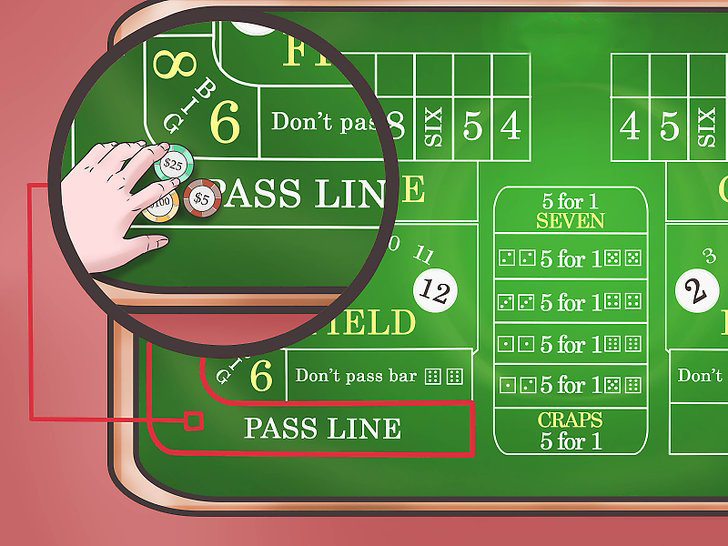
Playing solely on the Pass Line maintains a statistical advantage for the player over the casino.
On the initial stage, the Pass Line offers over a 30% chance of an immediate win, making it a favourable bet:
- Rolling a 7 or 11 results in an even-money payout (1:1).
- Rolling a 2, 3, or 12 (craps) causes the bet to lose.
- Any other number (4, 5, 6, 8, 9, or 10) establishes that number as the ‘point’ for the second phase.
Interesting fact: You can also bet against the other players. This is called a ‘Don’t Pass’ , which is essentially the opposite of the Pass Line with one key exception: if a 12 is rolled, the bet is a push (a tie, and your bet is returned).
Once the point is set, it is marked with an ‘ON’ puck. This is the number of points that must be rolled again before a 7 appears. The chances of winning get reduced, but the bet cannot be withdrawn. If luck is on the player’s side, they receive a payout of 1:1. If a 7 is rolled first, the bet loses.
Pass Odds
Pass Odds – this is an additional bet with a 50/50 chance, offering no advantage to either side. It can be placed after moving to the second stage of the Pass Line.
The number of chips you can bet on Pass Odds depends on the specific game rules. Usually, it is allowed to bet three times the amount of the Pass Line.
For example: if you bet 5 chips on the Pass Line, you can bet 15 chips on the Pass Odds. Pass Odds reduce the casino’s mathematical advantage to 0.4%!
Come
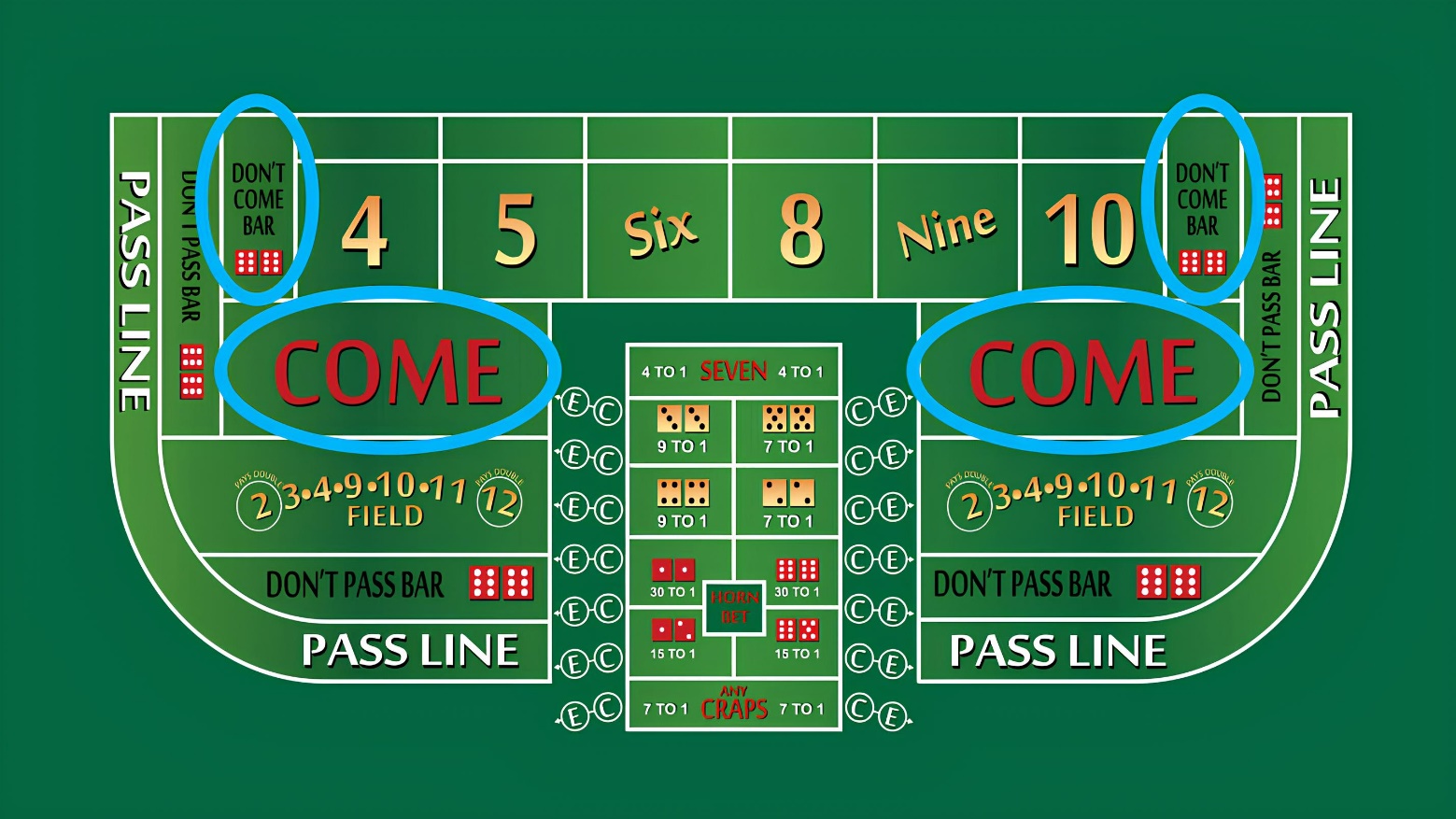
The Come bet is similar to a standard Pass Line wager, but is placed after a point is established. If a 7 or 11 is rolled, the Come bet wins. If a 2, 3, or 12 is rolled, it loses. If any other number is rolled, the bet transfers to that number. Subsequent rolls of this number result in a win, while a roll of 7 results in a loss.
The ‘Don’t Come’ bet is the opposite of Come. It wins on a roll of 2 or 3 and loses on a roll of 7 or 11. If the dice score a total of 12, the bet is returned.
Important: After a point is established, a roll of 7 results in a win, and a roll of the point number results in a loss.
The advantage of Come and Don’t Come bets is their flexibility: players can place and remove these bets at any point during the game, unlike Pass Odds bets.
Other Bets
The bet options are not limited to Pass Line, Pass Odds, and Come. Players can place additional bets such as:
- A bet on the likelihood of landing a particular (Field, Any 7);
- A bet on landing a double (Hardways);
- A bet on landing a particular number before a 7 lands (Place Win, Big).
Most additional bets on the table are unprofitable in the long run due to the statistical advantage that is held by the casino.
Rule Violations
A throw is considered invalid if at least one of the dice falls outside the boundaries of the playing field.
If a die lands on its edge, an independent player or spectator is invited to determine the result. The throw is repeated if a decision cannot be made.
If, after hitting the wall, a die touches any object or person, the result is accepted.
A throw is considered unsuccessful if neither die hits the back wall of the table. If only one die touches the wall, the throw is counted, but the player will be warned.
After a throw, the player cannot claim to cancel it. The result is recorded based on the position of the dice.
Types of Players
Craps is a game that is characterized by active interaction among players. The area around the tables is lively and bustling, as participants cheer each other on, root for their partners, and support the shooter.

The concepts of a “proper” or “improper” player are arbitrary and are not related to skill. An “improper” player can know the rules very well, while a “proper” player might be approaching the table for the first time.
Players who bet on the shooter’s success are considered “proper” players. They help to create a friendly atmosphere and share a common goal. Such bets allow players to experience both joy and disappointment together.
“Improper” players make bets against the shooter (Don’t Pass Line, Don’t Come). This behavior is discouraged. The reason is that these bets give the casino a slightly better advantage – 1.36% compared to 1.41% in Pass Line and Come. For this small, 0.05% difference, “improper” players often sacrifice a good standing with other players.
Superstitions
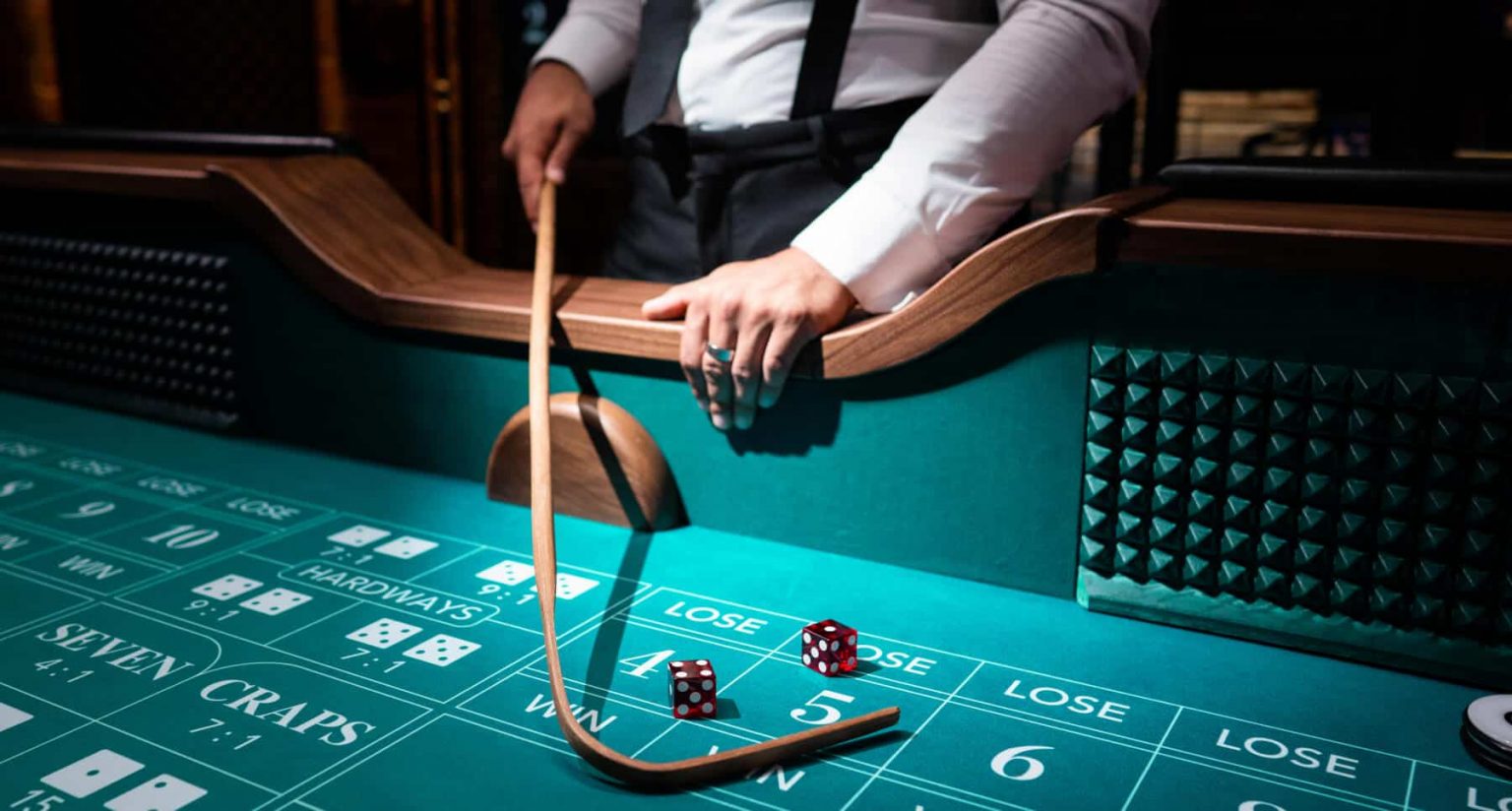
At the playing table, you may encounter decidedly superstitious players. Their behaviour may seem peculiar unless you’re familiar with the following superstitions:
- In craps, most superstitions center around the number seven. If a die flies off the table during a roll, many players are convinced that a seven is almost guaranteed to show up next. To avoid this, they may ask the dealer to return the same die rather than replace it.
- Another common belief is that you should never buy chips with cash at the table right after a lucky roll. If even one die touches that money, players say the next throw will bring a seven.
- Craps regulars are very wary of the dice clipping someone’s hand in mid-air – a moment widely thought to bring an inevitable seven. Even casino staff tend to respect this superstition and keep stray hands out of the way.
- The presence of a player making “wrong” bets is also said to increase the chances of rolling a seven. The more of these bettors there are, the more often seven supposedly appears. This belief fuels much of the irritation aimed at those who bet against the shooter.
- And above all, shouting “Seven!” during a roll is strictly off-limits. Many players genuinely believe the dice might “hear” it and return the number out of spite.
One more superstition warns players to be wary when the dealer slides the dice back showing a seven on top. Many believe that if the dice are returned in that position, the next bet is almost certain to go cold.

Superstitions attributed to new players:
- When a woman takes the shooter’s position for the first time, luck is said to be firmly on her side. Once the other players realise they are facing a female novice, the table quickly fills with players eager to bet on her success.
- Newcomers are advised against opening the game alone. It is customary to “warm up” the dice in the presence of a larger crowd, which is believed to improve their chances of winning.
- Seasoned players pay particular attention to first-timers at the craps table, often offering encouragement or advice.
Superstitious players also believe that the fewer times the dice spin in the air during a throw, the less likely a seven will appear. Accordingly, they aim to roll the dice in such a way that they rotate as little as possible.
Success Stories
Some of the most astonishing events in the world of craps are the so-called “monster rolls” – extraordinary streaks of consecutive throws. Precise records are scarce, as official statistics are not maintained.
A record-holder nicknamed “The Captain” achieved 147 consecutive rolls in 2005 before finally hitting a losing seven. His streak lasted 2 hours and 18 minutes. The year before, he had already managed to roll over 100 times in a row.
Another famed player, known as “The Golden Hand,” threw 118 consecutive numbers in a Las Vegas casino over a session lasting more than three hours.
Patricia Demauro may hold the ultimate record, with 154 consecutive rolls at an Atlantic City casino. Her streak spanned from 8 p.m. until half-past midnight. While many question the veracity of this feat, the casino itself confirms it.
Aside from long rolling streaks, craps also sees colossal wins. One player, nicknamed Quick Eddie, started with $100 and managed to grow his winnings to $250,000.
An even more remarkable tale involves Lee Bergstrom, who heard that the famed Binion’s Casino accepted bets of any size. Curious, he brought $777,000 in cash in a suitcase. The casino allowed him to place the wager, and he immediately won, doubling his money.
Bergstrom didn’t stop there. He returned to the same casino several times, making winning bets ranging from $190,000 to $590,000. On his final visit, he had bet a whole million – however, this time even the extraordinarily lucky Lee eventually lost. Despite this major setback, he ultimately walked away from the casino with a substantial profit.
Types of Craps
Craps does not offer much variety. The games differ only in the size of the Pass Odds bet, which can be 1, 2, 3, or 4 chips. All other rules remain the same.
In the “amateur” craps, the game is usually played by two people. A banker is first chosen by drawing lots — this player will play the seven. Their opponent decides which numbers to bet on. Both players then place one chip into the bank. The first to roll their numbers wins the entire pot. If the banker’s opponent rolls their numbers before a seven appears, the banker role passes to the other player in the next round.
Interesting fact: players at the table sometimes agree to pay a small bonus if someone rolls a rare combination.
There is also a version of craps which is played without dice, using cards instead. Two decks are stripped of all cards except numbers 2 through 6 and aces (considered as the number 1). Rather than rolling dice, players draw two cards from the prepared deck.
Craps Jargon
Craps is played in a loud, energetic atmosphere, and dealers must follow the rules precisely while maintaining clear communication with players. To keep the game running smoothly, they use specific terms and phrases that ensure everyone understands one another.
Certain numbers and expressions in craps sound remarkably similar in English, which can easily cause confusion amid the casino noise.
For example, “seven” and “eleven” sound almost identical. A misheard call can spark an argument. To prevent this, dealers announce eleven as “Yo! Eleven” and seven as “Seven – out!”
Familiarity with this terminology allows players to place bets more effectively and communicate confidently with the dealer and others at the table:
- If a player places a bet with the phrase “Two ways,” it means that a portion of any potential winnings will be shared with the dealer. It is essentially a gesture of appreciation. Though entirely optional, dealers tend to value such gestures.
- When the betting period closes, the dealer calls “Dice out,” signalling that the next roll is imminent. After the throw, the dice are retrieved from the table, and the dealer announces “Dice in the middle,” allowing players to place bets for the next roll.
- By saying “Off,” a player can temporarily pause the participation of their bet in the game. To bring it back into play, they simply say “Working.”
- For convenience, the terms “Inside” and “Outside” are used when placing bets on specific dice numbers – 4, 5, 6, 8, 9, and 10. A wager on 5, 6, 8, and 9 is called “Inside,” while a bet on 4, 5, 9, and 10 is referred to as “Outside.”
- The command “Press” allows a player to double a winning bet or raise it to a chosen amount.
Players should also pay close attention to the sizes of the payouts. A single payout may be listed as “4 to 1” or “4 for 1.” Despite their similarity, these expressions indicate different returns – 1:4 and 1:3 from the original stake, respectively.
Game Strategies
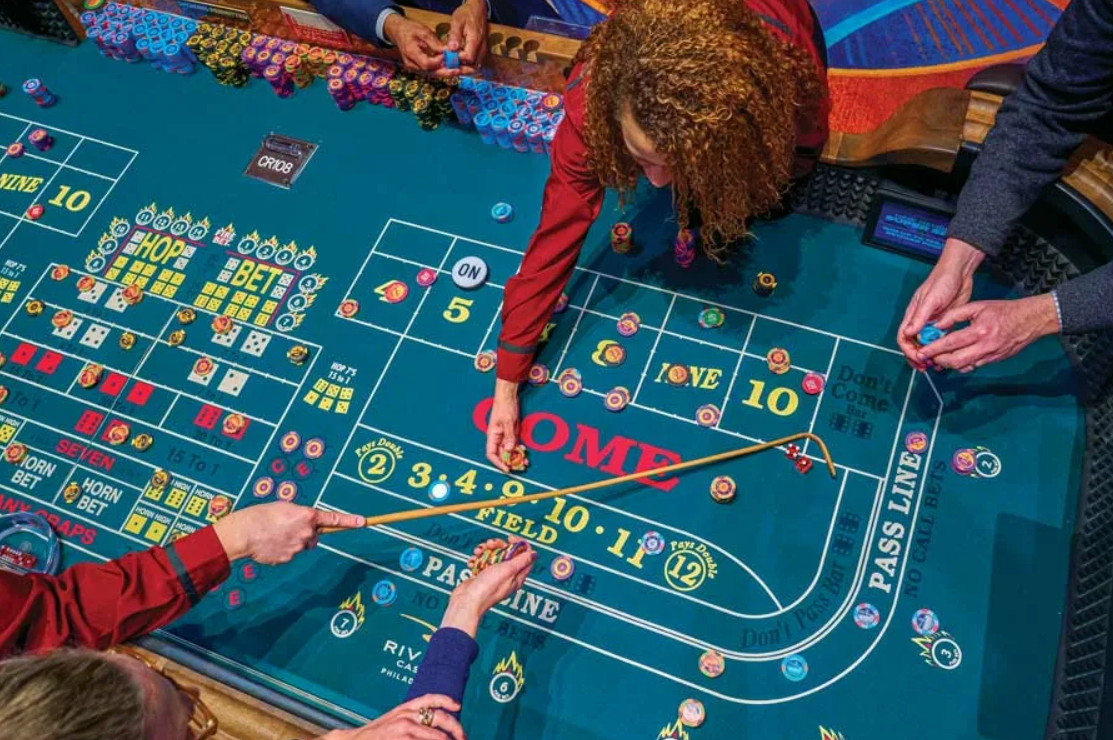
Some players follow strict systems, while others act spontaneously, raising their bets during winning streaks. The key is to stay disciplined, avoid letting excitement take over, and respect the limits set beforehand. This approach helps preserve your money and ensures an enjoyable gaming experience.
Iron Cross
The system is simple: place a bet on the Field and make a Place bet on numbers 5, 6, and 8.
Possible outcomes:
- The Field wins, Place bets remain.
- A Place bet on 5, 6, or 8 wins, the Field loses, and the other bets remain.
- A seven is rolled – all bets lose.
The seven is the most likely outcome, occurring with a probability of around 16% (roughly once every six rolls). For the system to be profitable, the combined winnings from the Place and Field bets would need to offset losses caused by sevens.
From a statistical perspective, achieving this over the long term is impossible. Combining losing bets does not make the overall system favourable to the player.
The house edge is:
- Approximately 3% for Field bets
- Approximately 4% for Place bets
A player will end up at a loss if intending to play for the long run.
Unbeatable Iron Cross
This is an enhanced version of the previous strategy.
Once the point is established, the player needs to do the following:
- Bet 5 chips on the Field.
- Bet 6 chips each on the numbers 5, 6, and 8.
The difference from the basic version is that the player focuses not only on recovering their bets but also on winning the Pass Line bet. Once the Pass Line wins, they no longer invest money in bets removed from the Field.
This approach comes from the belief that a seven is “due” to appear soon. Some players even keep a count and stop betting accordingly. However, this is a misconception, as each roll is independent.
The house edge of the Unbeatable Iron Cross stands at 3.34% with a 1:1 payout for the bet. This is better than the first system but still less favourable than a combination of Pass Line/Don’t Pass Line bets with Odds.
Pass Line with Odds and Come Bets
A round begins with a bet on the Pass Line, followed by a roll of the dice. A 7 or 11 wins the bet, while 2, 3, or 12 results in a loss. Any other number establishes the point, with the objective being to roll the point again before a seven appears.
To improve the odds, players use Odds bets. These complement the main bet and offer higher payouts when successful.
Another option is to place additional Come bets, which operate independently of the Pass Line. When successful, they move to a separate area corresponding to the rolled number and can also be supplemented with Odds bets.
An experienced player manages several combinations of Pass Line, Come, and Odds bets simultaneously. This strategy helps distribute risk while increasing potential winnings.
CPR (Collect, Press, Regress)
The CPR system allows players to enjoy extended sessions even with a modest starting bankroll.
Consider the strategy using one of the most favourable bets for the player – 6 or 8:
- Place 10 chips on 6 or 8 before a 7 appears.
- If the bet wins, collect the winnings but leave the original 10 chips in play (collect).
- If the bet wins a second time, double it (press). With a payout of 7:6 from the dealer, the player remains ahead even if a subsequent loss occurs.
- If the third roll is also a win, lock in the profit while leaving the original 10-chip bet on the table (regress).
- Return to the start of the strategy after completing the cycle or suffering a loss.
This system allows for gradual accumulation of winnings while controlling risk. It is ideal for newcomers to craps, as it avoids excessive losses, and can be applied to a single bet or multiple bets simultaneously.
5 Count
This strategy identifies players who show consistency in their throws. By keeping count, a player can recognise a potentially profitable situation and back the shooter with reduced risk.
The moment a player picks up the dice, the count begins. If their first roll produces a 4-10, it is recorded as a 1-count. Each subsequent throw increases the count by one, regardless of the outcome (2-count, 3-count, and so on).
The culmination comes at the count of 4. If on the fifth throw the player manages to roll one of the Point numbers, it is marked as a 5-count. This is the exact moment when one should place a bet on that shooter.
Favourable Dice Layouts
The outcome of a roll is inherently random, yet many players believe it is possible to exert at least partial control over the numbers that appear. This conviction has spawned numerous theories and techniques collectively known as “dice control.”
By the rules of craps, every roll must be entirely random. Nonetheless, certain methods can slightly reduce the likelihood of undesirable combinations, achieved through precise dice alignment, a proper grip, and a practiced throwing technique.
Dice-setting techniques employed by seasoned players:
- Hardway. Prior to the throw, the dice are arranged so that the adjacent faces display identical numbers: 5 and 5, 4 and 4, 3 and 3, 2 and 2. In this configuration, a single die may rotate freely without producing a seven. If both dice rotate along the same axis, a seven will occur only if one die executes a double flip.
- 3V. The dice are positioned so that the threes on adjacent faces form a “V.” This setup increases the likelihood of rolling a 6 or 8. Other face pairings include 4 and 4, 5 and 1, 6 and 2. A similar technique, 2V, uses twos to form the “V” and is aimed at rolling 4 or 10. Adjacent faces show 3 and 1, 4 and 6, 5 and 5.
- All sevens. The dice are arranged so that the sum of adjacent faces equals 7, thereby enhancing the probability of rolling a seven on the come-out roll.
The manipulations with the dice should be done in a manner that appears natural and executed swiftly, so as not to draw the attention or suspicion of casino personnel.
Identical Throws
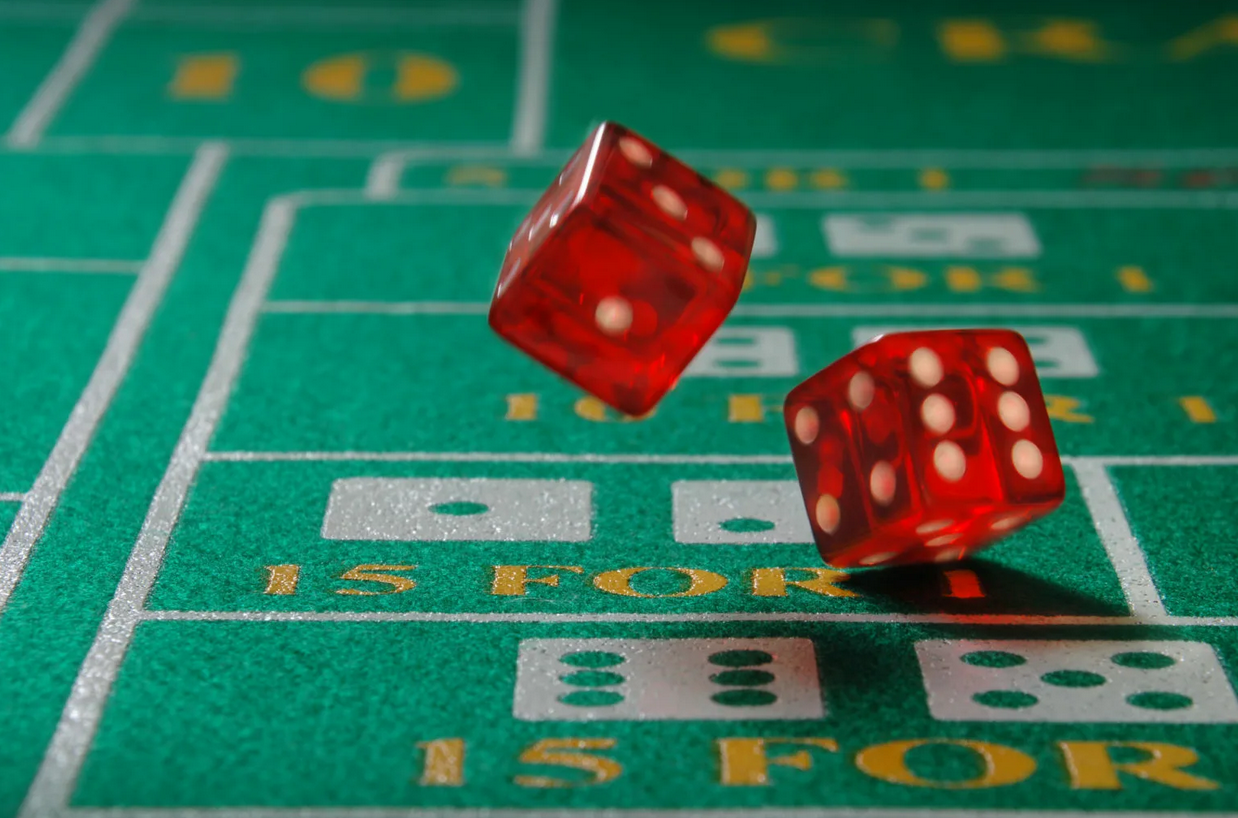 Controlled dice throwing is a crucial skill that can reduce the house edge. Its essence lies in the ability to consistently execute identical throws while avoiding the roll of a seven. Not everyone can master this technique.
Success stories attest to the effectiveness of controlled throws. Although many remain sceptical, hours of dedicated practice can yield remarkable results.
Interestingly, the “Hardway” method is particularly well-suited for practising dice control. It is recommended to use dice of different colours to track their rotation and flight trajectory.
Insurance Bets
A player can place the main bet of $5 on the Pass Line and then add a $1 bet on 2, 3, or 12. If a “craps” number appears, the loss on the main bet is $5, but the insurance wins $7. However, this strategy is unprofitable in the long term, as the house edge on craps bets exceeds 11%.
A common mistake is removing a Don’t Pass bet after the shooter establishes the Point (the target number). Although the chances of winning increase at this stage, a seven still appears more frequently than any other combination, so it makes sense to leave the bet in place.
Some players attempt to insure the Don’t Pass bet by placing an additional wager on the Point.
For example: with a $10 bet on Don’t Pass and $6 on the Point, an additional $6 is placed on 6. If a seven is rolled, the player wins $10 and loses $6 (net gain $4). If the Point appears, the player loses $10 but wins $7 (net loss $3).
Game Session Planning
Best bets in craps:
- Pass Line;
- Don’t Pass Line;
- Come;
- Don’t Come;
- Odds.
Their advantage lies in the fact that the house edge is minimal or even non-existent. To reduce risk, experts recommend combining Pass/Don’t Pass and Come/Don’t Come bets with additional Odds bets. It is also important to familiarise oneself with the payout odds and betting limits of the particular casino.
To avoid significant losses, it is essential to manage the bankroll carefully. The players should determine in advance the amount they are willing to risk.
Individual bets should not exceed 1% of the starting bankroll. Experts also advise setting time limits for each session and adhering strictly to them. It is a good idea to establish a maximum winning threshold, at which point the player should conclude their session.
Craps is an active game, involving rolling the dice and placing bets on the table. This dynamic process keeps the player engaged and distracts from the surrounding environment.
Chips should be arranged neatly in stacks according to denomination. It is unwise to carry too many chips at once. It is better to exchange them for cash regularly and store them securely in pockets or a bag. Unfortunately, even in reputable establishments, thieves and cheaters can sometimes be encountered.
It is also important to remember which sections of the table you have placed bets on. This allows you to monitor payouts and prevent cheating by dealers or other players.
Advice for Playing Craps
For novice craps players, the best approach is to begin by practising on free online versions of the game. This allows them to familiarise themselves with the interface and basic moves without risking any money.
Once the fundamentals are mastered, players can move on to playing for real money, either at a real casino table or in an online casino. Online craps offers the advantage of no time limits per roll, which is crucial for making measured decisions. Conversely, real casinos attract players with the unique atmosphere of excitement and adrenaline at the gaming table.
Achieving consistent results in craps requires practice and strategy training. Gambling demands composure and the ability to make quick decisions, skills that develop only through experience.
Beyond practice, it is vital to understand the mathematical aspects of the game – the probabilities of outcomes and the house edge for different bets. This knowledge enables players to make more advantageous decisions before each roll.
For example: bets such as Any Craps or Any Seven offer high payouts, but the house edge can reach up to 16%, making them extremely unprofitable in the long term. It is far more effective to focus on Pass and Come bets, as well as taking Odds whenever possible, as these carry a minimal house advantage.
Players should also avoid relying on systems that promise guaranteed wins. While they may improve the player’s chances, they cannot eliminate the element of chance entirely. Success in craps comes from a combination of solid theoretical knowledge, understanding the mathematics of betting, and practical skills.
 How to Play Roulette?
  How to Play Baccarat?
  How to Play Blackjack?


