

Poker is not just a card game, but an intellectual sport where mathematics meets psychology. Unlike roulette or slots, you are not playing against a casino, but against other players. That is why, over the long run, skill rather than luck determines success in poker. For beginners, the rules of Texas Hold’em (the most popular variant) may seem complex, but the basic mechanics can be learned in a single evening, while true mastery can take a lifetime.

The History of Poker: Legends and Facts
The origins of poker are shrouded in mystery, much like the faces (“poker faces”) of professional players at the table. Historians still debate its roots. Some trace its ancestry to the 16th-century Persian game As-Nas, which used 25 cards and featured bluffing. Others point to the French game Poque or the German Pochen, popular in the 17th and 18th centuries, both of which already included elements of betting.
In the form that it is known to us today, poker took shape in the United States in the early 19th century. It traveled along the Mississippi River on steamboats, evolving as new rules were added. Early versions were played with a 20-card deck (tens, jacks, queens, kings, and aces), but the game soon adopted the standard 52-card deck to allow for more players and greater excitement.
Legendary Moments in Poker History
The Dead Man’s Hand
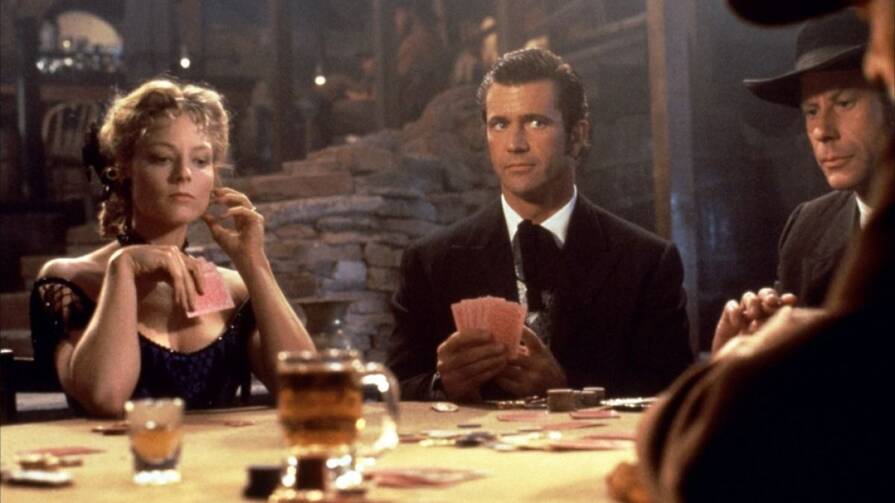
On August 2, 1876, the legendary gunfighter* “Wild” Bill Hickok was killed in a saloon in the town of Deadwood. He broke his own rule and sat with his back to the door. Jack McCall shot him in the back of the head while Hickok was holding two black eights and two black aces. Since then, the combination of two Aces and two 8’s has been known as the “Dead Man’s Hand” and is considered to be a bad omen.
*Gunfighter — a person skilled with a revolver and experienced in gunfights.
The Moneymaker Effect
In 2003, an accountant aptly named Chris Moneymaker qualified for the World Series of Poker (WSOP) Main Event through an online tournament that had cost just $39. He had never played live tournaments at that level, yet he went on to defeat 839 professionals and win $2.5 million. His victory as an amateur over seasoned pros sparked a global “poker boom,” proving to millions that in poker, anything is possible.

The Goal and Basics of Poker
In Texas Hold’em, your task is simple: win the pot by either making the best five-card hand or forcing all opponents to fold before the showdown.
Required items:
- A standard 52-card deck (without jokers).
- Chips, the in-game currency.
- The dealer button, a marker that indicates the dealer position. It moves clockwise and determines the order of play.
The key is: you do not need to have the best cards to win. The ability to convince your opponents of your strength (bluffing) often matters more than the cards themselves.
Card Combinations (Lowest to Highest)
In Hold’em, the winner is the player who makes the best five-card hand. You can use any combination of the seven available cards (2 hole cards + 5 community cards).
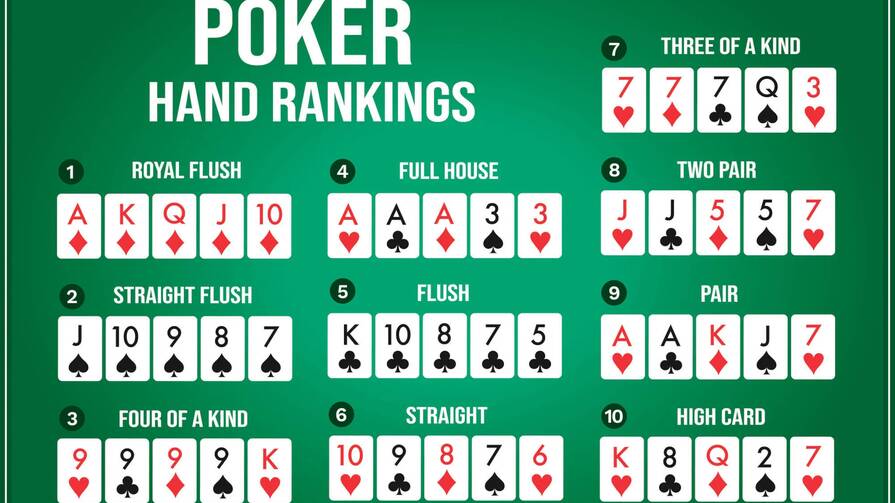
Hand rankings from weakest to strongest:
- High Card: If there are no matching cards, the highest card wins (Ace is the highest).
- Pair: Two cards of the same rank (for example, K-K).
- Two Pair: Two different pairs (for example, 10-10 and 5-5).
- Three of a Kind (Set): Three cards of the same rank (for example, J-J-J).
- Straight: Five consecutive cards of any suit (for example, 5-6-7-8-9). An Ace can be high (10-J-Q-K-A) or low (A-2-3-4-5).
- Flush: Five cards of the same suit in any order.
- Full House: Three of a kind plus a pair (for example, A-A-A-K-K).
- Four of a Kind: Four cards of the same rank (for example, Q-Q-Q-Q).
- Straight Flush: A straight in the same suit (for example, 7-8-9-10-J of spades).
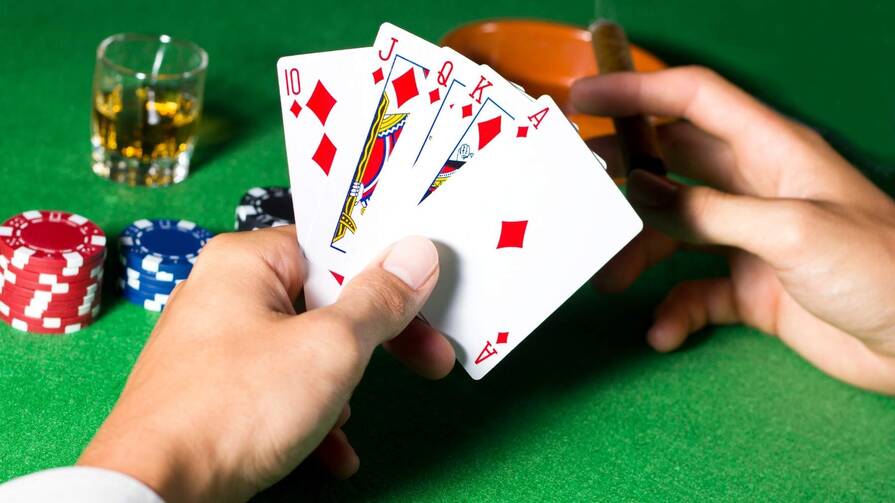
- Royal Flush: The rarest hand. A straight flush from Ten to Ace in the same suit. The odds of making it are 1 in 649,740.
Betting Order in Texas Hold’em
A common beginner question is: who takes the cards from the table?
The answer is simple: nobody does. The board stays on the table for the entire hand. Those cards are shared by all players. Each player combines the board with their two cards to make the best five-card hand possible.
Texas Hold’em is played over four betting rounds, often called streets. In each round, players bet into the pot. If a bet is not called, the hand ends immediately and the last player who made an aggressive action wins the pot.
Stage 0: Blinds
Before any cards are dealt, the two players to the left of the dealer post forced blind bets to create the starting pot:
- Small Blind (SB): usually half of the minimum bet.
- Big Blind (BB): the full minimum bet.
Stage 1: Preflop – first cards
The dealer deals 2 cards laid face-down to each player.
Action starts with the player to the left of the Big Blind, known as under the gun (UTG).
Available actions:
- Fold: throw your cards away and leave the hand.
- Call: match the current bet, which is the size of the Big Blind.
- Raise: increase the bet.
Betting continues clockwise around the table until all remaining players have matched the highest bet. Once that happens, the chips are pushed into the center of the table.
Stage 2: Flop – first community cards
The dealer burns one card, placing it face down into the discard pile, and then puts three cards face up on the board.
- From this point until the end of the hand, betting always starts with the first active player to the left of the dealer, usually the Small Blind.
- Players can now check if no one has bet yet. If there is a bet, you must call, raise, or fold.
Stage 3: Turn – 4th card
The dealer burns a card and reveals the 4th card on the board.
This is a crucial moment. The pot is already big, and bets often increase. You can now see 6 of the 7 possible cards and better evaluate your chances.
Stage 4: River – Final
The dealer reveals the final, 5th card on the board.
The picture is now complete. No more cards will be dealt. The final betting round begins. This is where the biggest bluffs often happen, when a player with a weak hand tries to force an opponent out of the pot with a large bet.
Showdown
If two or more players remain after all stages of betting are complete, they reveal their cards.
- The dealer, or the software in online poker, compares the hands.
- The pot goes to the player with the strongest five-card hand.
- If the hands are equal, for example both players have a straight to ten, the pot is split evenly.
Betting Limits
Betting limits in poker define the maximum amount a player can bet or raise in a single action. They are a core part of the rules and have a major impact on both game flow and strategy.
There are three main types of betting limits:
- No-Limit: The maximum bet is limited only by the player’s total chip stack. A player can go all in at any point during a hand.
- Pot-Limit: The maximum bet or raise cannot exceed the current size of the pot. This prevents extremely large bets when the pot is still small.
- Fixed-Limit: Bet and raise sizes are strictly fixed and predetermined by the table rules. In each betting round, players can only bet or raise by that set amount. The number of raises per round is also usually capped, often at three or four.
Overall, betting limits create predictability in pot size and help control the level of risk in the game.
Strategies: Offline vs Online
Playing online and playing live is like driving a race car versus taking a taxi. The rules are the same, but the pace and the approach are completely different.
Tight Aggressive (TAG) Style
1. TAG style is the gold standard for beginners, both online and in real life.
- Main idea: You play fewer hands (tight), but when you do play, you do it aggressively by raising instead of calling.
- Live play: You can play slightly wider because the pace is slow, around 25 hands per hour, and waiting for cards gets boring. You also have the advantage of reading physical signs (tells) like body language and gestures.
- Online play: Play tighter. The pace is fast, about 60 to 80 hands per hour, and opponents only see your stats, not your face. Your bluffs need to be mathematically sound, not based on gut feeling.
2. Bankroll Management
- Live play: Dispersion (volatility) is lower, and risks are smaller. 20 to 30 buy-ins are sufficient.
- Online play: Dispersion is high due to the fast pace of the game. It is recommended to have 50 to 100 buy-ins of your limit, especially if you play tournaments, in order to survive a downswing without going broke.
3. Bet Sizing
- Live play: Players often open large, 4x or 5x the big blind, to punish limpers – players who simply call.
- Online play: The standard opening size is 2.2x to 3x. Large bets here often reveal a beginner or a very strong hand. Online poker math is precise down to the cent.
4. Multitabling
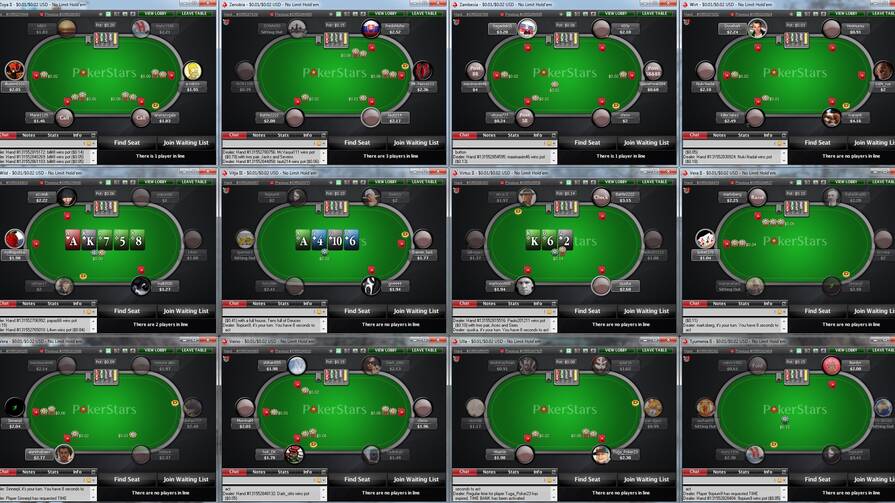
This is a feature unique to online poker. You can play 4, 8, or even 12 tables at the same time.
- Pros: You build volume much faster, smoothing out dispersion.
- Cons: Attention is spread thin. When playing 12 tables, you turn into a robot, making only standard decisions. Creativity and complex bluffs do not work here.
Reverse Side: Cheating and Security
Where there is big money, there are always people trying to cheat the system. Poker has its own specific forms of fraud.
- Bots
Programs that play instead of humans. They do not get tired, do not tilt, and play with mathematical precision. Poker rooms fight them by analyzing mouse movements and click timing. Modern bots, especially AI-based ones, are a serious threat to the system. - Collusion (Team Play)
Two friends sit at the same table and play as a team. They may share their cards with each other, for example through a messenger, putting pressure on honest players with coordinated betting. Security teams detect such schemes through hand histories and betting patterns. - Superusers
The most infamous scandal in poker history is the case of Ultimate Bet. Room employees, including champion Russ Hamilton, had access to a special account known as “god mode” that allowed them to see all players’ hole cards. They stole more than $20 million from users by winning with impossible accuracy. - RTA (Real-Time Assistance)
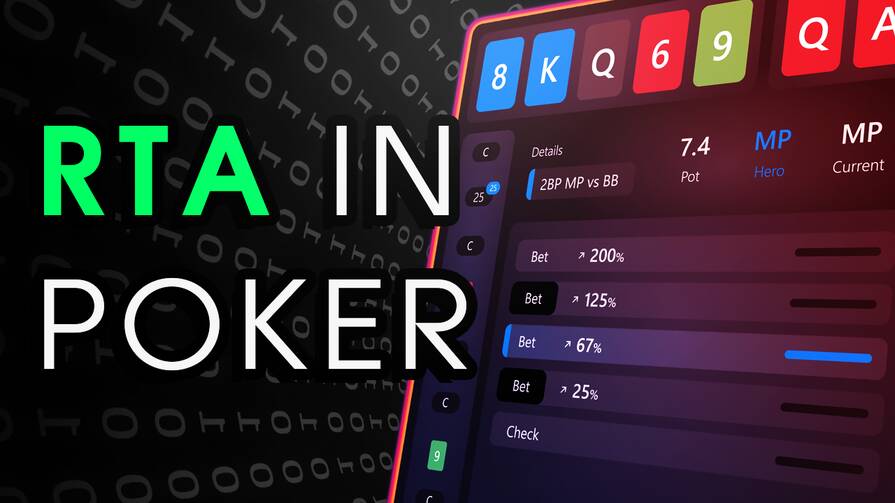
The use of real-time helper software, such as solvers. The player inputs a situation, and the AI provides the optimal decision. This is strictly prohibited, and poker rooms permanently ban players for it, and confiscate their funds.
Man vs Machine: The Fall of a Legend
It was a standing belief for a long time that a computer would not be able to beat a human in no-limit poker because of bluffing and incomplete information. Chess fell in 1997 with Deep Blue, Go fell in 2016 with AlphaGo, but poker held out.
In 2017, an AI called Libratus, developed at Carnegie Mellon University, faced four top professional players in heads-up play, one on one. Over 20 days and 120,000 hands, the bot crushed the humans, winning a virtual $1.7 million. It learned how to bluff, vary bet sizes, and adapt to its opponents.
In 2019, an AI by the name of Pluribus went even further, winning in six-player games (6-max), which was considered an extremely difficult challenge. It played aggressively, made massive overbets, and showed a win rate that is unattainable for humans. Since then, poker has officially been considered a “solved” problem for AI.
Other Popular Types of Poker
Hold’em is the king of poker, but the world of poker is huge. Here are three versions every self-respecting player should know.
Omaha
The second most popular game. The betting rules are the same, but:
- Four hole cards are dealt (instead of 2).
- An iron rule: You MUST use exactly 2 of your own cards and exactly 3 community cards. You cannot use 1 of your own and 4 community cards.
Key feature: Strong hands are made much more often. Straights and flushes are commonplace here.
7-Card Stud
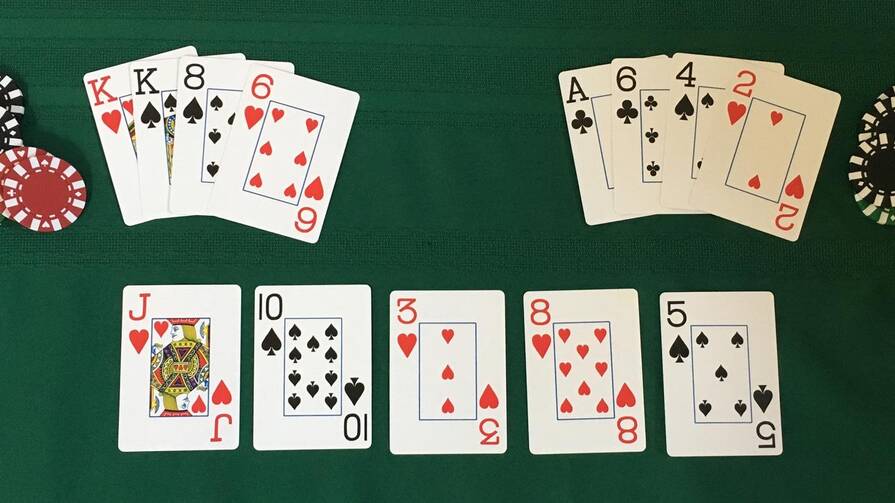
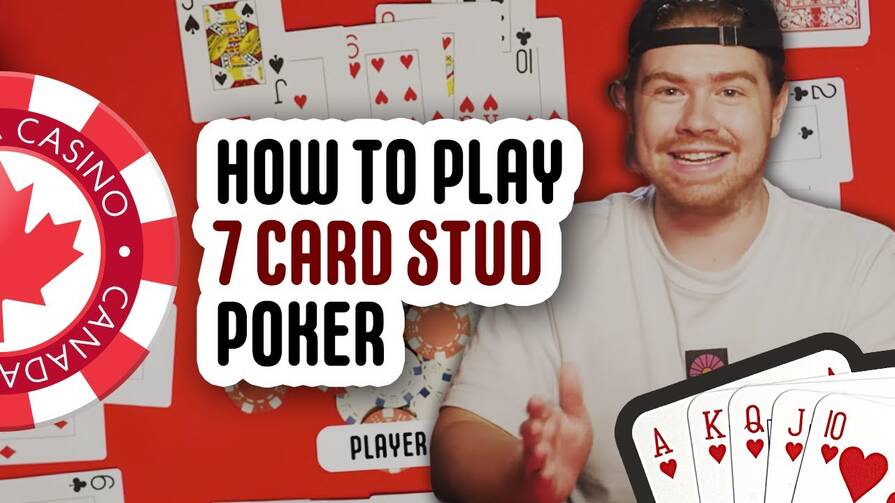
A classic from the pre-Hold’em era. There are no community cards here.
- A player is dealt 7 cards over the course of the hand: 3 face-down and 4 face-up.
- You must make a hand using your own 7 cards.
- Key feature: It is important to remember the cards your opponents have shown (“dead cards”).
Open Face Chinese Poker
A game without chips or betting.
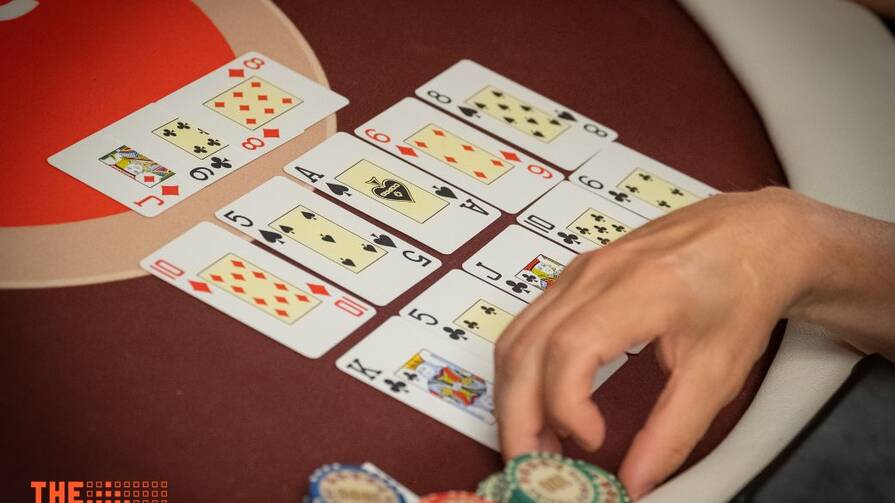
- Players arrange their cards into three rows: bottom (5 cards), middle (5), top (3).
- The bottom row must be stronger than the middle, and the middle stronger than the top.
- The game is played for points.
Conclusion
Poker is a marathon, not a sprint. You can learn the rules in one evening, but understanding the depth of the game takes years. Start small: learn the hand rankings, play attentively, and watch your opponents. Remember the line from the movie Rounders: “If you can’t spot the sucker in your first half hour at the table, then you ARE the sucker.” Good luck at the table!

 How to Play Slots
  How to Play Roulette
  How to Play Baccarat
  How to Play Craps
  How to Play Blackjack
  Rating of Online Casinos
  1xSlots Casino Review
  Bonuses at JVSpinBet Casino


