
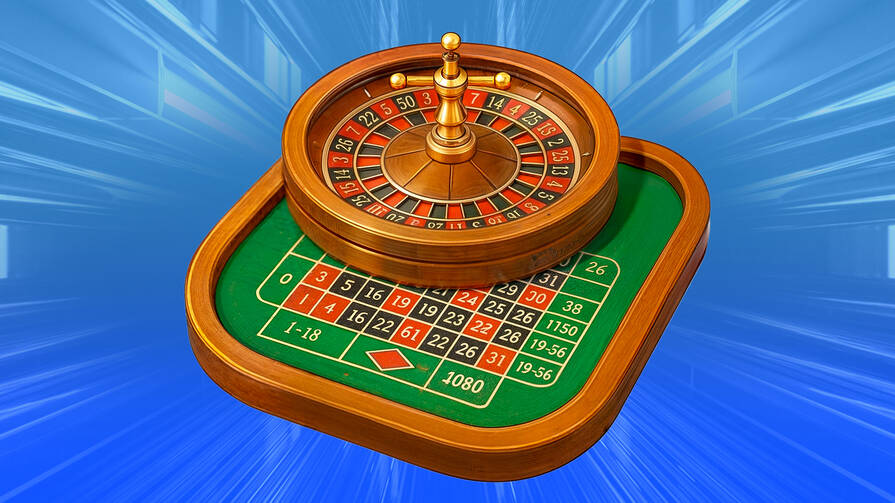
Roulette has been a symbol of classic casinos and excitement for four centuries. In the European version, the house edge is only 2.7%, which is considered to be one of the fairer rates among table games. Each spin is independent and entirely determined by chance. However, choosing the right table, the type of bet, and bankroll strategy significantly influences the flow of the game.
Players enjoy roulette for its simple rules and the variety of possible bet combinations. Some players prefer basic betting, placing wagers on red or black, while others assemble complex sector-based patterns on the wheel. With the right approach, roulette remains as a form of harmless entertainment rather than a mindless chase after wins or attempts to recoup the losses.
The Origins of Roulette
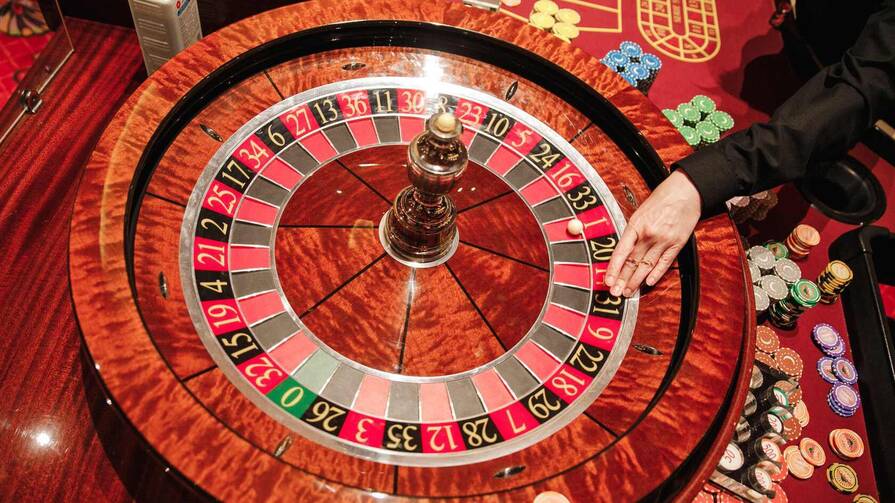
The origins of roulette are traditionally tied to France in the 17th and 18th centuries and the rise of European gambling. One popular version claims that the prototype of the modern roulette wheel appeared by accident when Blaise Pascal was attempting to invent a perpetual-motion machine. The spinning wheel with a ball turned out to be a convenient mechanism that was later adapted into a game built around numbers and wagers.
By the early 19th century, roulette was already mentioned in Parisian gambling establishments and literature, including Jacques Lablée’s novel La Roulette, ou Histoire d’un joueur (1801). At that time, roulette wheels mostly featured 31 pockets and a double zero, giving the casino a significant advantage. In 1842, François and Louis Blanc introduced a wheel with a single zero and 37 pockets in Bad Homburg, improving player odds and helping the game spread across Europe.
In the second half of the 19th century, the new roulette format gained popularity in Monte Carlo, becoming the main source of revenue for local casinos. Along with European emigrants, the game crossed into North America, where the double-zero layout reappeared, later becoming known as American roulette. Since then, the core principles have remained mostly unchanged, with only certain rules and payouts varying between versions.
Rules and Types of Bets
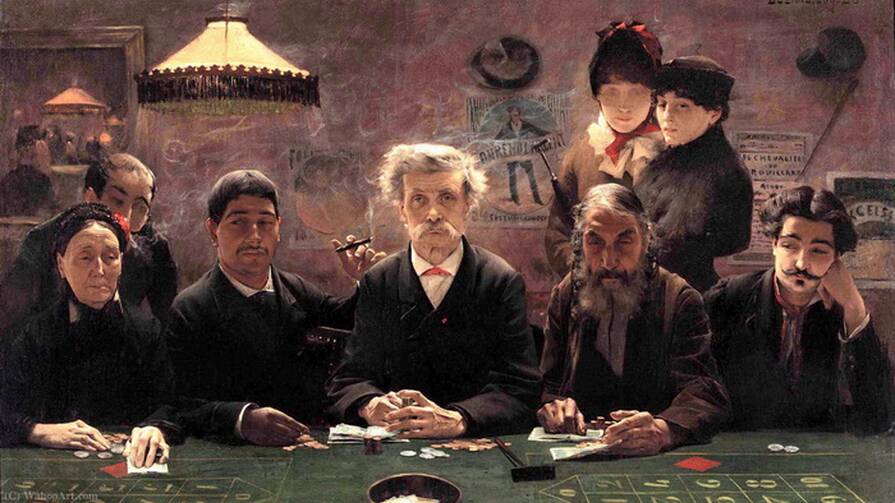
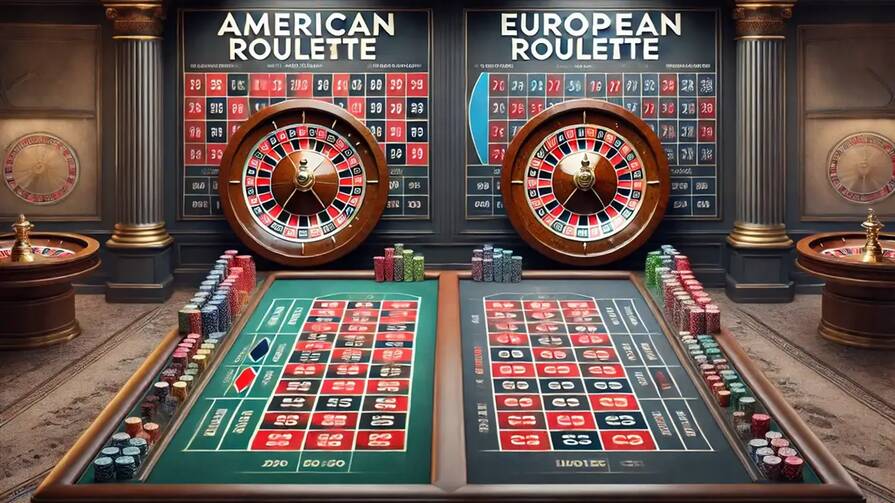
In any type of roulette, there are two main elements: the wheel with numbered pockets and the betting table. In the European version, the wheel has 37 pockets: numbers from 1 to 36 and a green 0 pocket. The American version adds a second green pocket, 00, increasing the total number of pockets to 38.
Players place bets on the table by using chips, having chosen specific numbers, groups of numbers, colors, or other characteristics. After the “no more bets” announcement, the dealer spins the wheel and launches the ball in the opposite direction. When the ball stops in one of the pockets, the dealer announces the winning number, collects the losing chips, and pays out winnings according to the payout table.
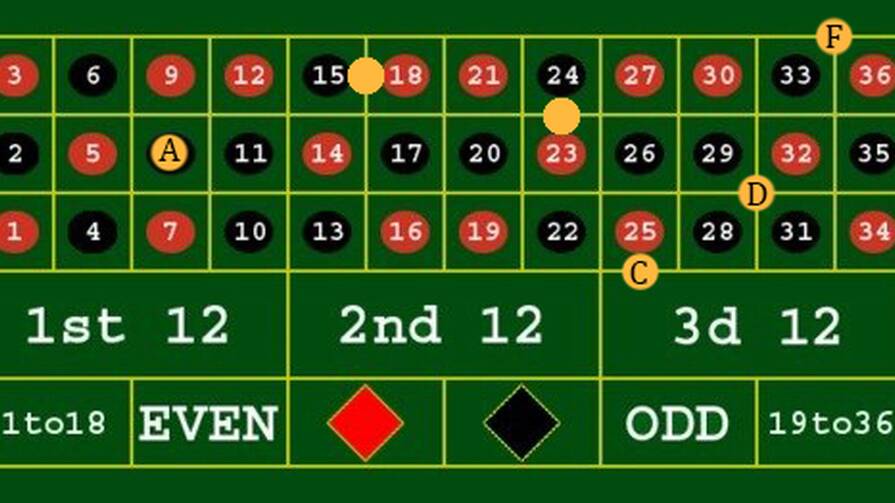
Bets are usually divided into inside and outside bets. Inside bets are placed directly on individual numbers and small groups of numbers. These include a straight-up bet on a single number, a split on two adjacent numbers, a street on three in a row, a corner on four, and a line on six numbers, each with a fixed payout. Outside bets cover larger sections — color, odd or even, ranges 1–18 and 19–36, as well as dozens and columns of 12 numbers.
Outside bets win more often but pay modest odds of 1:1 or 2:1. Inside bets bring rare but large winnings of up to 35:1, making them suitable for players willing to endure long losing streaks. When a zero comes up, most standard bets are considered losing unless the rules of a specific version provide mitigating conditions.
Bets on zero are also allowed.
Straight Up: a chip is placed directly on the “0” pocket on the betting table. The chance of winning is 1 in 37 (European) or 1 in 38 (American). Payout 35 to 1.
Combination bets with zero:
- Split 0+1, 0+2, 0+3 — on the border of zero and adjacent numbers. Payout 17 to 1.
- Trio/Street 0+1+2 or 0+2+3 — three numbers including zero. Payout 11 to 1.
- Corner 0+1+2+3 — a square including zero. Payout 8 to 1.
- Basket/Top Line (American): 0+00+1+2+3. Payout 6 to 1, but the house edge is 7.89% — the least favorable bet.
In European and especially French roulette, there are so-called announced bets, which focus not on the numbers’ position on the table but on the sectors’ position on the wheel. The most well-known are Voisins du Zéro, Tiers du Cylindre, and Orphelins, each covering a specific section of the wheel with a complex combination of chips. These bets increase variety and excitement but generally reduce the player’s return percentage.
- Voisins du Zéro (“Neighbors of Zero”) — a bet on 17 numbers around the 0.
- Tiers du Cylindre (“Thirds of the Wheel”) — a bet on 12 numbers opposite zero (one-third of the wheel).
- Orphelins (“Orphans”) — a bet on 8 numbers not included in the previous two groups.
Main Variants of Roulette
Today, three varieties of roulette are the most widespread: European, American, and French roulette. They look similar on the surface but differ in the number of zero pockets and several additional rules that directly affect the house edge.
- European roulette uses a wheel with 37 pockets and a single green zero. With standard payouts, such as 35:1 for a straight-up number bet, this gives the house an edge of about 2.7 percent — the amount a casino earns on average from the betting turnover over the long run. This version is considered the baseline and is usually recommended to players as the best balance of risk and fair rules.
- American roulette adds an extra 00 pocket to the wheel while keeping the payout structure identical for all types of bets. For a straight-up bet, the payout remains 35 to 1 in both versions, but the probability of hitting a number in American roulette becomes 1 in 38 rather than 1 in 37. As a result, the house edge rises to 5.26%, making the odds almost twice as bad for the player compared to the European version.
- French roulette is identical to European in appearance and number layout, but it introduces special rules for handling bets when the zero lands. These may include La Partage or En Prison: in the first case, the player loses only half of the bet when zero hits; in the second, the bet is “imprisoned” until the next spin and returned if it wins on the following result. Thanks to these rules, the house edge on bets drops to about 1.35%, making the French roulette the best choice for rational play.
There are also simplified and custom variants mostly found online, such as mini-roulette with 13 pockets or games that add multipliers to certain numbers. They look attractive and dynamic, but their theoretical return may differ significantly from the classic versions, so it’s always advisable to check the advertised RTP of a specific table before playing.
Betting Strategies and Advice from Experienced Players
Betting in roulette adheres to strict mathematical rules, the odds of landing certain numbers are impossible to manipulate. Strategies only help to control the size of the bet, stretch out the bankroll, and maintain discipline when gambling.
Martingale
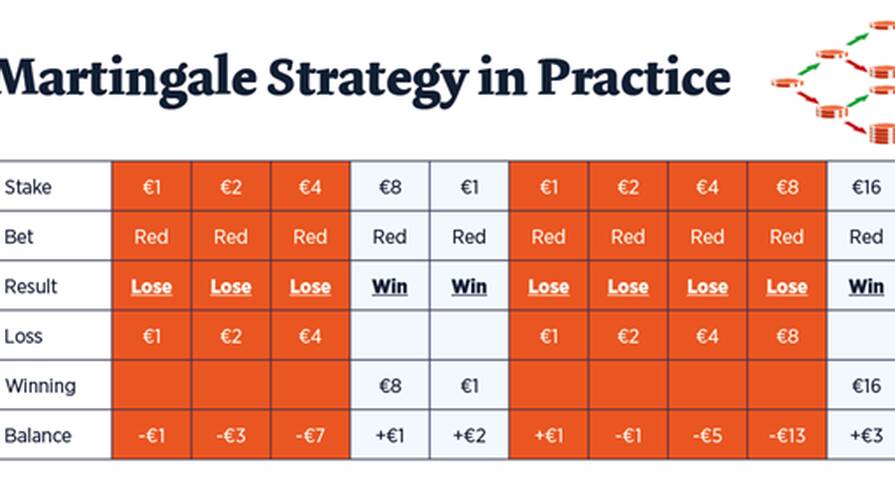
The most well-known system is where the player doubles the bet after each loss on even odds (red/black, odd/even). A single win is meant to cover all previous losses, but the problem is that the stakes increase extremely quickly. A streak of several losses runs into the table limits or drains the bankroll, which is why professionals consider the Martingale system as more of a teaching example.
D’Alembert
A softer variant is when the wager is increased by one unit after a loss and decreased by the same amount after a win. The bets grow slowly, allowing you to play longer even with a small bankroll. The reverse version of D’Alembert works the opposite way — it increases the wager after a win to make profitable use of winning streaks.
Fibonacci
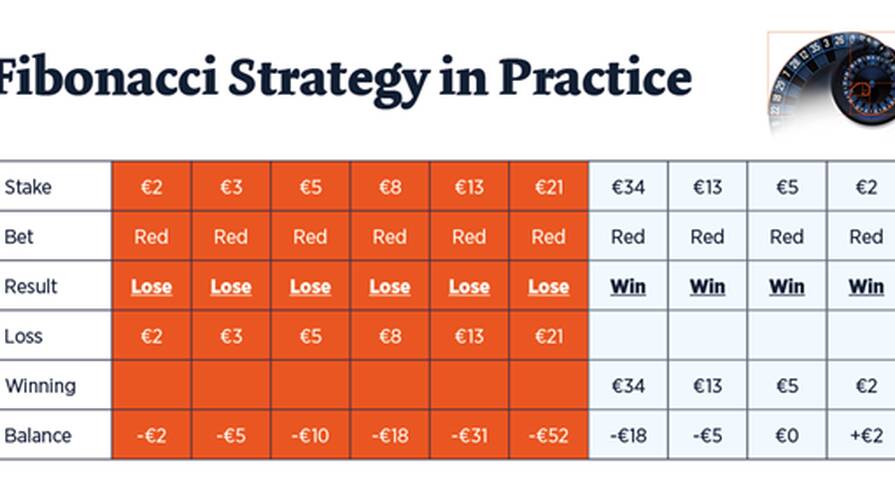
It is based on a sequence of numbers where each next number is the sum of the two previous ones (1, 1, 2, 3, 5, 8, 13…). After a loss, the player moves forward along the sequence; after a win, they move back two steps. This system is less aggressive than the Martingale and is suitable for long sessions.
Labouchère
The player writes out a row of numbers in advance, the sum of which equals the desired win. Each bet equals the sum of the first and last numbers in the sequence. When winning, these numbers are crossed out; when losing, the bet amount is added to the end of the row. This method requires attention and record-keeping but provides flexibility in managing risk.
1/36
The bankroll is divided into 36 equal parts — this becomes your bet size. Bets are placed on the same preselected number (or any number, as it does not affect the outcome). If the number wins within the first 36 spins, the player recovers their bankroll and keeps the bets that have not been placed. After that, it is advisable to end the game and go celebrate the win…
Practical Recommendations
Start by choosing the right version of roulette — European or French is better than American due to the lower house edge. The base wager should be limited to 1–2% of the bankroll per session, and loss and profit limits should be set in advance. Do not believe the notion of “hot” or “cold” numbers — each spin is unique, and the probability of any number remains unchanged. Strategies are useful for discipline and money management but cannot “beat the system” — the mathematical advantage always belongs to the casino.
Can One Win in Roulette?
Yes, it is possible to win at roulette. You can score a single big win thanks to the high volatility of betting on a single number, or win consistently by taking advantage of casino bonuses. The first option requires a lot of luck and strict discipline, to win and then leave immediately. While the second option demands careful calculations, registering at multiple casinos, and/or managing multiple accounts. Professionals who do this are called bonus hunters, and they use complex grey-area schemes to exploit online casinos. However, this carries significant financial risks, so beginners are much better off avoiding it altogether (even if they have detailed guides)…

By the way, before registering at an online casino, test yourself by answering the following question:
The casino offers a sticky bonus of 500% to your deposit with a x40 wagering requirement: Would you take this bonus if you plan to fulfill its wagering requirements on European or American roulette?
If you hesitated or answered “Yes,” it’s better to pass on this idea.
 How to Play Baccarat?
  How to Play Craps?
  How to Play Blackjack?


