

Slots (slot machines) are the most accessible and at the same time the most dangerous form of gambling. Unlike poker or blackjack, they require no skill, strategy, or years of practice. You press a button and get a result. This deceptive simplicity is exactly what makes slots the most profitable category for casinos (up to 70% of all revenue) and at the same time the most destructive for players.
Before you pull the lever for the first time or press the tempting “Spin” button, you must understand three undeniable facts:
- Slots are mathematically designed against you
- A jackpot is a statistical rarity (like being struck by lightning or having a brick fall on your head)
- Addiction to slots develops faster than addiction to card games or sports betting
Psychologists call modern video slots “electronic morphine” and this is not a figure of speech.
It should also be taken into account that in many countries, even relatively liberal ones, gambling is prohibited or strictly controlled. And although residents of such countries can technically register accounts and play in online casinos, problems with withdrawing winnings, especially large sums, are almost inevitable.
Playing slots illegally may incur questions not only from the casino, but also from banks and payment services. In some cases, tax authorities or even law enforcement may start asking questions in regards to the origin of the funds.
⚠️ Dangers: Why Slots Are a Trap for the Brain
Research conducted by neuropsychologists shows alarming statistics: 71% of people with severe gambling addiction started specifically with slots, even though previously they played poker or bet on football without any issues. So what makes slots so dangerous?
- The illusion of control and skill
Slot machines are designed to make players feel involved, as if their actions matter. Players are led to believe they can sense the right moment, recognize a pattern, or anticipate a cycle. Many modern slots even include a “Stop” button, allowing the player to halt the reels manually, creating the impression of skill or timing.
In reality, this sense of control is entirely false. The result of a spin is determined the instant the button is pressed. Timing, intuition, and manual input have no influence whatsoever. By the time your finger reaches the screen, the random number generator has already produced the outcome. Everything that follows is simply an animation revealing a decision that has already been made.
- The near miss effect
Imagine this: two jackpot symbols line up perfectly on the screen, and the third stops just a hair above the payline. Your brain screams, “I was so close! One more time!” Neurobiologists have found that a near miss, or a “bite” as streamers call it, activates the same areas of the brain as a real win. Your dopamine system does not see the difference between an “almost win” and an actual victory.
Manufacturers program slots so that near misses occur 5 to 10 times more often than real wins. In reality, this is the same loss as three completely different symbols, but psychologically it is an extremely powerful hook for addiction.
- The trance zone (The Machine Zone)
Anthropologists describe this “zone” as a hypnotic state that slot players fall into. Bright pulsing lights (tuned to a precise frequency so they do not irritate but keep you stimulated), triumphant music even during losses, and the high speed of spins all shut down critical thinking.
Players lose track of time, money, and physical needs. There are documented cases of people sitting behind a machine for 12 to 18 hours straight without food, water, or using the bathroom, completely unaware of it.
- Mathematical hopelessness
In poker, a weak amateur can beat a world champion (short term luck plus bluffing). In blackjack, with card counting and a single deck, it is possible to gain an advantage. In slots, all of this is technically impossible. The house edge is permanently built into the algorithm. The more you play, the more inevitably your balance moves toward zero. This is not a question of “if”, only “when”.
Signs of a gambling problem (checklist):
- You think about slots constantly (at breakfast, at work, before sleep).
- You gamble away more than planned in an attempt to “win back” losses from a previous session.
- You hide the real amount of your losses from loved ones or borrow money.
- You feel irritation, anxiety, or aggression when trying to stop.
- You have lost interest in life and hobbies that used to bring you joy.
If you have recognized at least three of these signs in yourself, stop right now.
The History: From a “One-Armed Bandit” to Digital Hypnosis
In 1894, Charles Fey, a skilled mechanic, invented the first slot machine in his workshop in San Francisco. His revolutionary creation, called Liberty Bell, featured three mechanical reels with five simple symbols: a diamond ace, a heart ace, a spade ace, a horseshoe, and the Liberty Bell itself. Three bells on a payline awarded the maximum payout — 50 cents, which at the time was roughly half a day’s wages for a worker.
Fey’s key innovation was that the machine paid out winnings automatically in coins, without the need for a bartender to participate. By 1899, he had established mass production, and “one-armed bandits” — a nickname derived from the lever on the side that players had to pull — began appearing in saloons, tobacco shops, and brothels throughout the Wild West.
In 1916, the concept of the jackpot emerged: a combination that paid out the entire contents of the machine at once. This turned a simple gambling device into a cultural phenomenon, with people lining up for the chance to win. By the mid-20th century, mechanical parts were replaced by electronics. In the 1990s, the transition to digital gave rise to video slots with animations, bonus rounds, hundreds of paylines, and 3D graphics.
Today’s online slots are essentially sophisticated software that is running on RNGs (random number generators), capable of spinning billions of rounds per hour and utilise psychological triggers that Charles Fey could never have imagined.
How Slots Work: Maths vs You
A modern slot is no longer a mechanical device with spinning metal reels. It is a computer program that only visually simulates spinning. Each spin is determined by three key factors that you need to understand.
1. RNG (Random Number Generator)
This is a microchip inside the machine (or the casino’s server) that generates random numbers. When you press the “Spin” button the RNG selects a specific number, which is then translated by a complex algorithm into the positions of the symbols on the virtual reels.
It is impossible to predict the next number. It is impossible to “catch a cycle.” You cannot “heat up” or “cool down” the machine. Every spin is a completely independent event.
2. RTP (Return to Player)
This is the main number you should look for before playing. RTP shows what percentage of all bets from all players a slot will theoretically return over millions of spins.
For example: an RTP of 96% means that out of $1,000,000 wagered by all players, the slot will “return” $960,000 in winnings. The remaining $40,000 (4%) is the casino’s profit (House Edge = 100% – RTP).
A critical clarification: RTP is calculated over an infinite mathematical sample. In your personal session of 200 spins, the actual return could be 0% (you lose everything) or 100,500% (you hit a big bonus). RTP only matches the stated value over millions of rounds.
3. Volatility
This is about the game’s pace and the size of payouts:
- Low volatility: Frequent small wins (every 3-5 spins). Your balance decreases slowly. Suitable for long sessions played “for time”.
- Medium volatility: A balanced middle ground. Moderate wins at a reasonable frequency.
- High volatility: Rare but massive wins (x1000, x5000, or even x21,000 and more of the bet). Your balance can drop very quickly, but there is a chance for a jackpot or a big bonus.
Do not confuse volatility with RTP! A slot with 96% RTP and high volatility can drain your bank in 15 minutes, but it might suddenly pay out a huge win. A slot with the same RTP but low volatility will allow two hours of steady play, but with almost no chance of hitting a large payout.
Types of Slots
1. Classic Slots/Fruit Machines
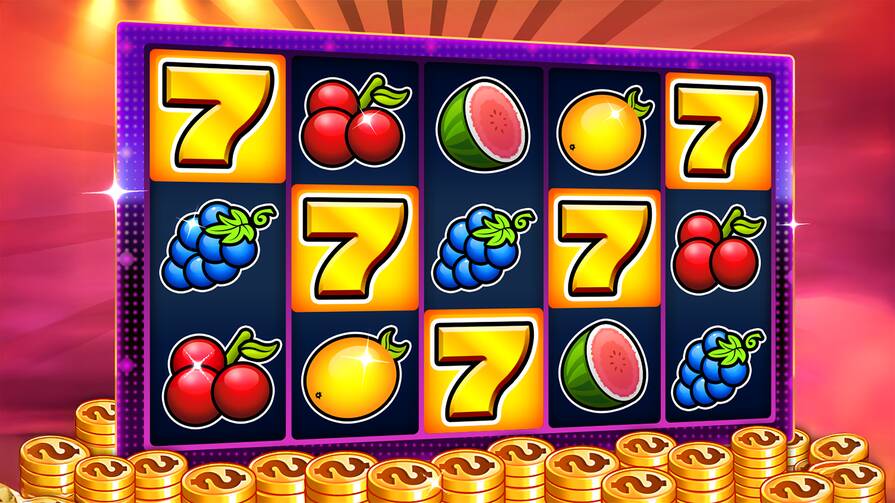
These often feature 3 reels, 1-5 paylines, retro symbols (cherries, lemons, sevens, BAR). Simple rules, low volatility. RTP is usually 92-95%. Designed for nostalgia and a relaxed, meditative style of play.
2. Video Slots
These feature 5-6 reels, 10 to 243 (or even 1024 and more) ways to win, bonus rounds, free spins, multipliers, cascading symbols. This makes up 90% of the modern market. RTP ranges from 86% to 99.5%.
3. Progressive Jackpot Slots
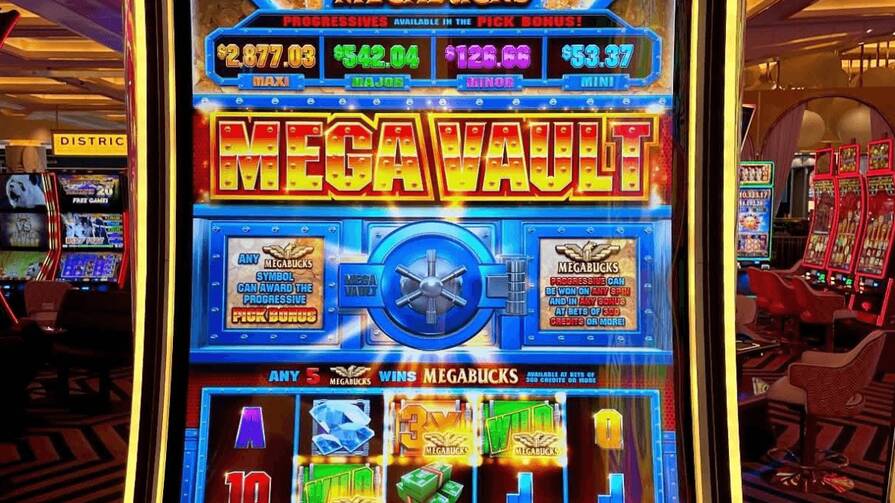
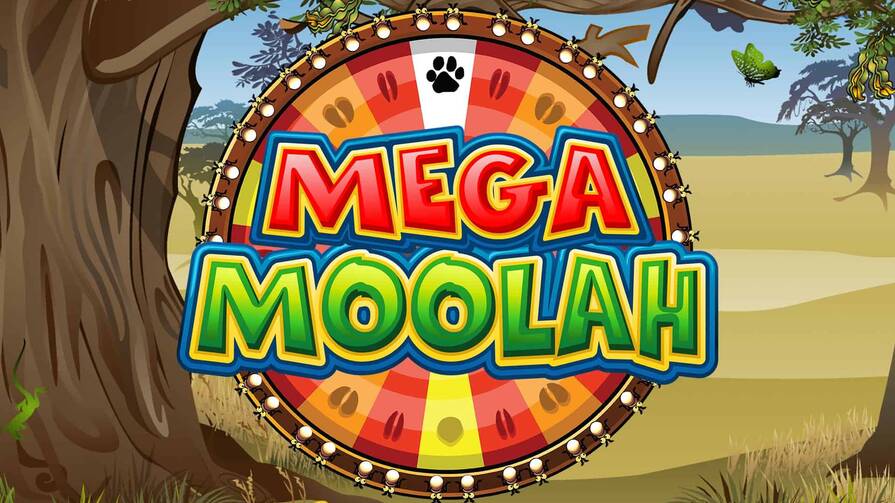
A small portion of each bet from all players across the casino network goes into a shared jackpot, which continues to grow until somebody wins it. Examples include Mega Moolah (record $22.9 million) and Megabucks ($39.7 million). Because of these contributions, the RTP of the base game is usually around 90%.
4. Megaways
A mechanic from Big Time Gaming: each spin changes the number of symbols on the reels (from 2 to 7), creating up to 117,649 ways to win. High volatility, with massive multipliers in bonus rounds.
5. Cluster Pays
There are no traditional paylines. A win occurs when 5 or more identical symbols touch each other (horizontally or vertically). They then disappear, and new symbols fall from above for free, creating so-called cascades.
How to Play Slots: Step-by-Step Guide
- Find a trustworthy online casino – check out some reviews on specialized forums, paying close attention to negative feedback and verified cases of unpaid winnings.
- Be cautious with welcome bonuses, especially restrictive ones that lock your deposit until the bonus is wagered. If you win a large amount early, you may not be able to withdraw it. Only use these bonuses if you plan for a long gaming session.
- Choose a slot with a high RTP. Open the slot, go to the “Info” section (icon “i”) or “Paytable”. Look for RTP of 96%+ for online slots and 88%+ for land-based casinos.
- For the chance of a big win, select slots with high volatility and a large maximum payout. After a major win, withdraw the full amount immediately and stop playing. As a compromise, you can leave a small portion to continue playing safely.
- Set a comfortable bet size. Use the “+” / “-” buttons or “Coin Value”. Bet no more than 1-2% of your bankroll per spin (for example, if you have $50, bet $0.50-1 per spin).
- Choose the number of paylines, if the slot allows for it. A larger number of active lines increase your chance of winning, but also increase the cost of each spin (10 lines at $0.10 = $1 per spin).
- Press Spin. Reels spin for 2-3 seconds. To save time, you can use the Stop button or enable fast spin in the settings. If symbols line up on an active payline from left to right, you win (some slots pay both ways). Winnings are paid out instantly. Next to the spin button, there may be a MaxBet button – pressing it by accident can risk a large portion of your bankroll on a single spin.
- Watch for long lines, clusters, and bonus features:
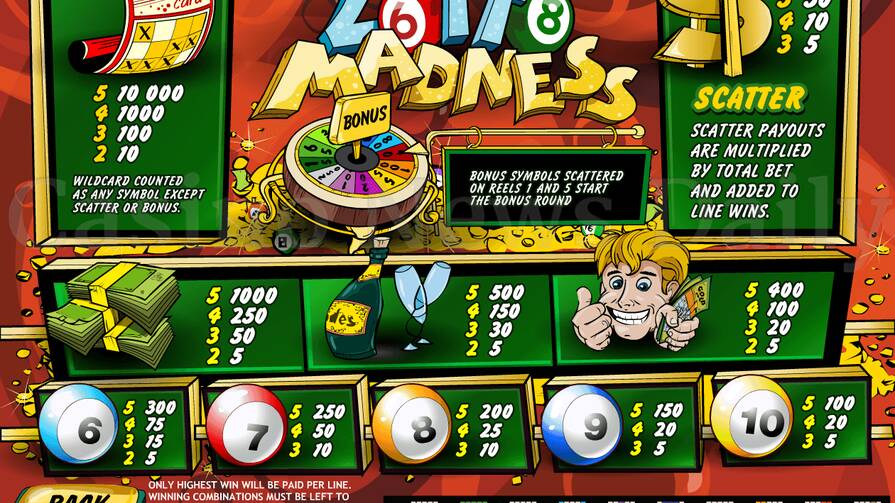
- Scatter symbols: usually 3 or more anywhere → trigger free spins (10-20 free spins, often with multipliers x2-x10).
- Wild symbols: replace any symbols (except Scatter/Bonus), helping to complete winning combinations.
- Bonus Games: interactive mini-games such as picking chests or spinning a wheel.
Slot “Strategies”: Myths and Reality
The harsh truth: There is no strategy in slots that can change the RTP. The RNG cannot be manipulated. Anyone selling a “secret system to beat slots” is a fraud.
Dispelled myths
❌ “Hot” and “Cold” Machines.
Myth: “This machine hasn’t paid out in a long time, so it’s about to hit!”
Reality: Slots have no memory. Each spin is independent. A machine that hasn’t hit a jackpot in 10,000 spins has exactly the same chance of hitting on the next spin as a machine that just paid out a million.
❌ “Zigzag” Theory.
Myth: “If the symbols line up in a zigzag, the machine is ready to pay.”
Reality: Complete nonsense. The symbols on the screen are just a visual representation of the RNG result, not an indicator.
❌ Larger Bet = Higher Chance.
Myth: “If you bet the maximum, the RTP increases.”
Reality: RTP is fixed regardless of the bet. The only exception is some older progressive slots, which only allow access to the jackpot with a certain minimum bet (check the rules).
❌ An Old Casino Account Lowers Winnings.
Myth: “If you play from an old account, the machine pays worse than a newly registered one.”
Reality: Absurd. There is no difference whether you play on a new or old casino account. The slot RNG works independently of account age or player activity.
The Only Real “Strategy”: Bankroll Management
You cannot change the RTP or cheat the RNG. But you can control how long you play and how much you lose.
100 Spins Rule:
Your bankroll should allow for at least 100 spins. For example, with $50 and a $0.50 bet, you get 100 spins. Why 100? It’s the minimum for a statistical chance to hit at least one bonus round (bonuses usually appear once every 80-150 spins).
Time Limit:
Set a timer for 20-30 minutes. When it goes off, withdraw your remaining money and leave the casino, no matter the outcome. Remember: the longer you play, the more the House Edge works against you.
Loss Limit (Stop-Loss):
Before you start, decide: “If I lose 50% of my bankroll, I stop.” Reached it? Stop. Do not try to recover losses — that is a direct path to disaster.
Win Limit (Take-Profit):
Doubled your bankroll? Withdraw 100%, or at least 50%, and continue playing with the remainder. This ensures you do not lose your winnings.
Interesting Facts About Slots
Largest wins in history:
- $42 million (2023, WowPot): An anonymous player bet $50 in a crypto casino and won a record breaking $42 million.


- $39.7 million (2003, Megabucks, Las Vegas): A 25-year-old software engineer bet $100 at the Excalibur casino and became a millionaire. This is the largest win ever in a land-based casino.
- £13.2 million (2015, Mega Moolah, UK): British soldier John Heywood won £13.2 million playing with a stake of just 25 pence.
The Psychology of Sounds
Studies done by the University of British Columbia have shown that slot sound effects (coin jingles, triumphant music) cause players to overestimate their wins by 24%. Even when you lose, your brain thinks you are winning.
Losses Disguised as Wins (LDW):
You bet $1 and win $0.40, but the machine plays winning music and animations. Technically, you lost $0.60, but your brain gets a dopamine hit as if you had won. This practice is legal but highly manipulative.
Conclusion
Slots are entertainment, not an investment or a way to make money. If you decide to play, treat any loss of money as a fee to see a movie: the money is spent for the experience, and do not expect it back. Set strict limits (money and time) before your first spin and never, under any circumstances, break them. If you feel you are losing control, seek help. Playing is worth the enjoyment, but it is not worth your mental health or your life.
 How to Play Poker
  How to Play Roulette
  How to Play Baccarat
  How to Play Craps
  How to Play Blackjack
  Rating of Online Casinos
  1xSlots Casino Review
  Bonuses at JVSpinBet Casino


